Category Archives: Uncategorized

German wine queens: they’re reigning, they’re pouring

In Germany I was fortunate enough to meet not one but two reigning monarchs, the current wine queen of the Reinhessen, Helgard Frey, and the queen of all German wine, Annika Strebel (that’s her above, at her coronation). The very idea of a giving a nubile young woman a ball dress, a tiara and a title ending in “queen” seems weird, anachronistic, redolent of an era when Benny Hill chased buxom blondes on fast forward in the name of comedy and wrinkly Bruce Forsyth openly ogled pretty young co-presenters on peak-time television (hang on, that still happens). In England people often complain about “political correctness gone mad”, but with wine queens it’s surely a case of just political correctness gone.

Still, Strebel seems pretty happy about it and she’s the one that counts. Germans, it seems, love a good wine queen. Some 300 of them (Germans, not queens) turned up last month to watch Frey, a student in business administration, take her regional crown. In a year’s time she’ll battle all of this year’s 13 regional wine queens for the chance to succeed Strebel. Candidates have to be over 18, female and unmarried – blonde hair is not absolutely essential, but it clearly helps – and are then chosen based on their knowledge of wine and of the area, their ability to speak English and on the content of a set-piece speech – Frey (that’s her below), in a move logically unlikely to wow a room full of wine snobs, spoke about matching riesling with Chicken McNuggets.

The following weekend in Neustadt Strebel – who had previously served as Reinhessen’s wine queen – scooped the national crown from all the other regional sovereigns, as decided by an 80-strong jury culled from the worlds of politics, media, business and indeed wine, and watched by millions on live television. That’s right, live television. Her home town has already strung a banner across the main road proclaiming itself home of the wine queen. “As a sensualist,” the report on her coronation on the website of the German wine institute says, “Annika likes to collect wild herbs for the kitchen and grows her own pumpkins.” That’s right, pumpkins.

I may mock, but Strebel will have the last laugh – probably while sitting in a first-class seat on her way to one of her all-expenses-paid ambassadorial outings to China, America, Columbia and any number of European countries. And she is a great deal more photogenic than me (as you can see – thanks, if that’s the right word, to Torsten from The Wine Rambler for the photo).

The girls of Gaul: Weingut Karl-Heinz Gaul

I was taken to Germany to be introduced to the area’s wines but, as is so often the case, it’s the people I was introduced to who were really interesting. We’ll come to the wines, or at least some of them, in due course, but first the most interesting winemakers. Sure, they weren’t the strongest characters we met, but the others were all men, mainly in their 40s. It’s very different at the Gaul winery in Pfaltz. Actually it’s one of the Gaul wineries in Pfalz – there are four, each owned by a different branch of the same family. This one, Weingut Karl-Heinz Gaul, makes 120,000 bottles of wine every year in almost as many styles, from dirt-cheap litre bottles of unspecified “rottwein”, through rosés and fizzes and another ropey cabernet cubine (shudder) to pinots blanc, gris and noir and more ambitious riesings. Not a single one of those bottles is imported into the UK. This in itself isn’t such a surprise – we are yet to embrace a lot of German wine styles, and the Pfalz is mainly known for churning out execrable plonk – but there’s no reason why they couldn’t sell successfully in the UK. For not only do they make some very enjoyable, extremely good-value white wines, they also have an unusual story to tell about how they came to be making them.

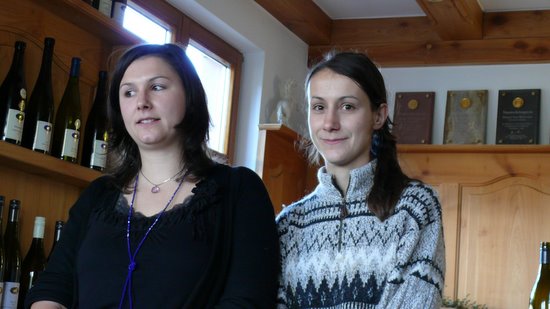
This branch of the Gauls used to farm vineyards twice this size, until Karl-Heinz split from his brother, with whom he used to share winemaking duties, slicing their land in two and taking sole control of half of it. Karl-Heinz went on to have two daughters, Karolina and Dorothee, born two years apart in the 1980s, who spent their childhoods helping their dad in the fields and in the cellar and hoping one day to work with him as adults. So when they finished school, both went away to study oenology at university. But in 2008, when Karoline was 24 and Dorothee just 22, Karl-Heinz was suddenly taken ill. He would never work again. The daughters returned, prematurely, to Sausenheim, and took charge.

Winemakers Karoline, left, and Dorothee Gaul

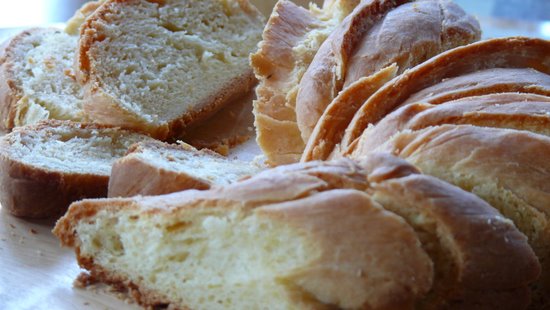
They have had to finish their education on the job, though they have been helped where necessary by their wider family and by some of the winemakers Karoline did placements with during her studies. There are five full-time employees: the two daughters, their mother, who does the accounts and also bakes a pretty mean savoury brioche, a female intern and a token man, who drives the tractors. But though he is no longer around, Karl-Heinz is still a key figure. Talking about her winemaking Karoline, the more outgoing and the better English-speaker of the two, starts many sentences with the words “My father used to…” A picture of a happy, smiling Karl-Heinz, clutching a bottle of wine in either hand, hangs in the tasting room, taken just four years ago.

But he doesn’t lend a morose air to proceedings – far from it. While we’re there a string of locals drop in to stock up for the weekend, each greeted by name; there’s a bottle of apple juice behind the counter so children can participate in tastings, up to a point. For all the tragedy in the family’s recent past, there is a very positive feel about the place.

A pretty mean savoury brioche, courtesy of Mother Gaul

Karoline and her sister admit that they have made some wines they’re not entirely proud of since being thrust into charge, but they never repeat a mistake and now turn out some very decent stuff at very unprepossessing prices, some of which (the wines, not the prices) have picked up major awards in Germany (a few bottles come with a sticker proclaiming their success in one snazzily-titled competition, though I’m not sure the phrase “Goldene Kammerpreismünze Landesprämierung” is ever going to catch on over here). Of those we tried, a kabinett riesling from the honigsack vineyard and a sweet, auslese gewurtztraminer stood out. They’re not organic but to judge from the state of their winery, which was rather over-run with fruitflies, they’re not big on insecticides.

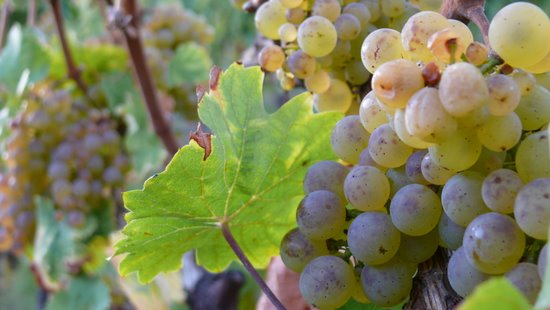
Riesling grapes on the vine

The 2011 harvest had just been completed, save for one patch of riesling that with any luck is destined for a trockenbeerenauslese (TBA to its friends) – a sweet style that requires the grapes to be left to shrivel up, ideally with the help of some noble rot. Inside the winery the fermenting juice bubbles and farts – we tasted one wine in progress, a fruity, yeasty, actually-fairly-pleasant-in-small-doses beverage still some way from being called a wine. We met many more outrageous characters during our rather manic two-day tour – as you’ll find out if you stick with me over the next few days and weeks – but more than any of them I’ll be keeping an eye out for the girls of Gaul.

A quick trip to Germany – day one

So I’m in Germany, where I’m going to be very quickly checking out the regions of Reinhessen and Pfalz in the company of several bloggers from around Europe (plus one each from Canada and China). Last night (I write this shortly after breakfast) we did nothing more than have an extended boozy dinner, where the food was largely Scottish (Scottish salmon followed by Angus beef) but the wine was distinctly local. The big hits were a couple of rieslings (of which more tomorrow), the big flop was the wine whose label is pictured above – Blutsbruder (that’s Blood Brother, translation fans, hence the crossed-wrist motif) “Fur immer vereint”. It was probably the most attractively packaged German wine I can remember seeing, but inside the bottle lurked a fairly foul blend of Cabernet Cubin – new to me, a cross of Lemberger and Cabernet Sauvignon – Regent and Cabernet Sauvignon. It smelled cloying and sweet and confected and fake, as if had come in powdered form and simply been mixed with water. Apparently it sells very well here as an easy-drinking red wine, for around 10 Euros a bottle. But it was very attractively packaged. As, indeed, was the wine queen of Reinhessen, a tantalising concept for which I’ll be providing photographic evidence before my trip is over.

Going, going, gone … to hell in a handcart

As well as sniffing around for the very best wine my standard everyday wine budget will allow (between £7ish and £15) for more-or-less immediate consumption, I’m also constantly in the market for wines of a similar value that are worth tucking away for a few years. Of course, the very best wines cost a great deal more than this, but it’s my feeling that at the sub-£20 level there’s still lots that’s worth having and holding. I’ve got some lesser Bordeaux, various offerings from the Rhone, some Barbaresco, a bit of Rioja, some Australian riesling, one of New Zealand’s top Bordeaux blends and a case of something Argentinian lying around various storage facilities waiting for the day when I think they’re ready for consumption.

I had to do this, you see, because I appreciate the extra class that a bit of bottle age can give a wine, and you can’t normally buy wines – particularly at this price – which have got that already. The downside is that you’ve got to pay for someone to look after the wine until you want it, or invest in the facilities necessary to look after it yourself. And you’ve got to have plenty of patience.

But recently I discovered the world of wine auctions. Wine auctions are where people who did exactly what I’m currently doing only a few years ago, and either lived to regret it or didn’t live at all, get rid of their purchases. And where people who bought Carruades de Lafite a few years back and can’t believe how much they can get for it these days liquify their assets. And it seems that it’s also where people like me can snaffle stuff that’s already got some bottle age for a decent price while the people with the big pockets squabble over the first growths.

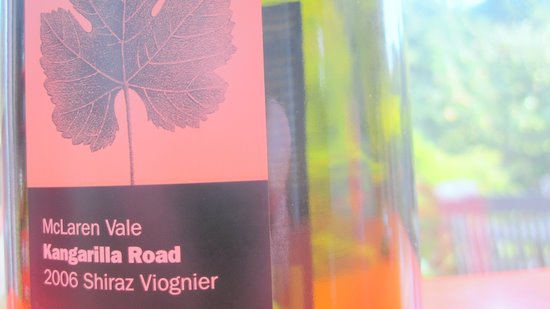
It all started a couple of weeks ago, when I was enjoying a bottle of Kangarilla Road shiraz/viognier and searched to see where I might be able to get some more. I happened upon a lot at a forthcoming sale at Bonham’s that included three cases of the stuff, as well as other Australian wine of similar standard (seven cases in all, which would keep me going for a while) and thought I’d put in a cheeky bid. It had to be pretty cheeky, because seven cases of even the cheapest wine adds up to loads of money, and in the end I was nowhere near winning. But by the time I’d passed through their rigorous security checks I’d had time to peruse the rest of the catalogue, and another lot caught my eye.

This one contained six bottles of 1997 Musar – an old favourite from the Lebanon – I’ve already got a couple of bottles each of the 2002 and 2003, but I knew that the owner, Serge Hochar, considers his finest offering at its best about 15 years from vintage and that this should therefore be approaching its peak – six bottles of a 2004 Cotes du Rhone from the Mas du Libian called Omar Khayyam, of which I already own half a dozen from the 2009 vintage courtesy of The Wine Society, and which I had previously tried and enjoyed – and six bottles of a 2000 Brunello from Siro Pacenti, who the Wine Spectator has called “the best winemaker in the appellation” but represented a bit of a wildcard. Bought from a shop, the Musar would cost around £30 a bottle, the Mas du Libian perhaps £15 and the Brunello at least £50 a bottle. I put in a bid, valuing the wines at an average of about £15 a bottle.

And I won.

I have the wines in my cupboard now, and they’re pretty much all ready for drinking, without years of patience and storage costs. Though I know nothing of where these wines came from and can’t tell how well they’ve been stored in the past, I believe that I got myself a bargain. But temptation, as always with wine, is everywhere – Bonhams, Christie’s, Sotheby’s and Straker Chadwick all have at least one wine auction scheduled in this country this month.

I have never set foot on a more slippery slope.

Sassicaia, Guidalberto and the sense in “trading up”

I went to an excellent tasting last week, organised by Decanter magazine, which claimed to have brought together some of Italy’s greatest winemakers (as an aside, it’s just as well they can organise a decent tasting as their magazine – at least to judge by their most recent issue, an enormous brick filled with useless information about the awards they recently gave away and endless puffing of the credentials of the judges who awarded them – isn’t up to much).

Sadly I didn’t have enough time to work my way around a room crammed both with interesting wines and with people wanting to try them, but there was no way I was leaving without trying, for the first time, one of Italy’s true icons, Sassicaia. I’d been waiting for this moment for four years, since a lovely afternoon spent in Bolgheri, the small town in Tuscany where it is produced (I’m always more attracted to wines when I feel that I know a bit about where they are from). While in Bolgheri, little more than a stop-off on the way to Pisa airport at the end of an extended stay in the Maremma, I’d had a wonderful meal, visited a brilliant enoteca and absorbed enough of the Sassicaia legend to become mildly obsessive about it – only the £125-a-bottle price tag was holding me back (and that’s the cheapest bottle I can find – if you want to buy a bottle of the 1985 from Harrods you’re looking at £2,400).

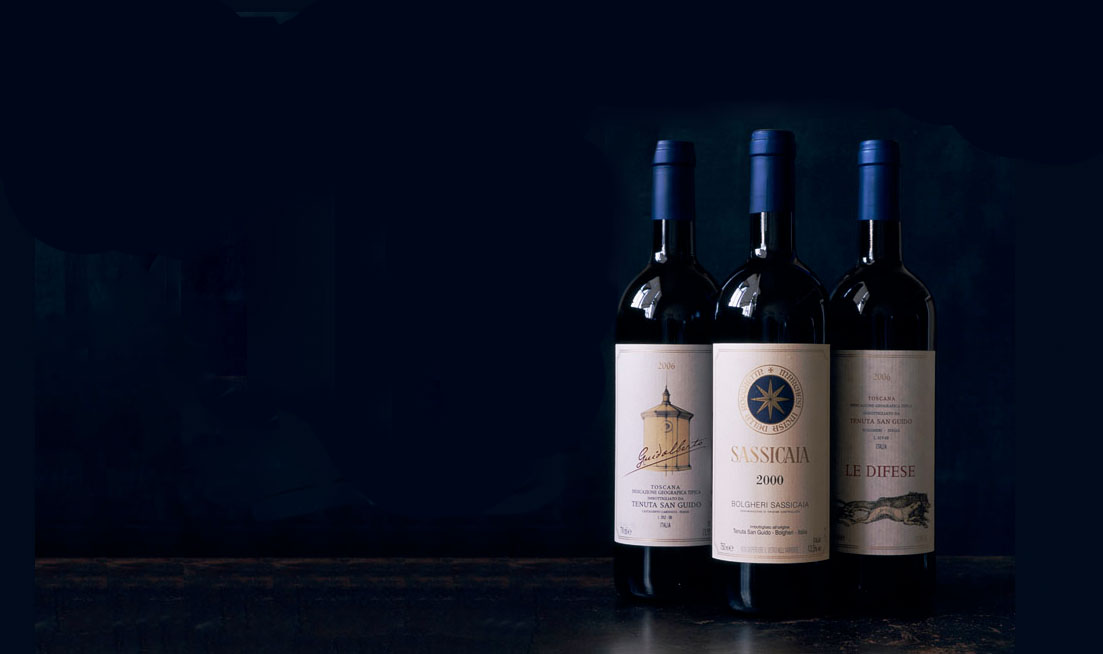
Back to London, and having been bustled away from the Gaja table I found Tenuta San Guido’s surprisingly open and made my move. There were three bottles available: the latest vintage (2009) of La Difese and Guidalberto, their two more reasonable offerings, and the 2004 Sassicaia. It’s perfectly possible at these tastings to thrust your glass at whoever’s manning the table, demand a sample of the top wine and be on your way, but I consider that a bit rude and always make a point of tasting through a producer’s entire range. Not much of a hardship when it’s as small and as fine as this one.

I ended with the Sassicaia, and was not disappointed. It was very intense, laden with spices before gradually revealing layers of brambly fruit. But the thing is, the Guidalberto had also been excellent – loads of mouthwatering acidity, good tannic structure, bright fruit. They’re not identical by any means – Sassicaia is made of cabernets sauvignon and franc, while Guidalberto is a blend of cabernet sauvignon (some of it the leftovers from the Sassicaia vineyard), merlot and sangiovese; Sassicaia has an extra year in oak barriques, none of which is American – but both were wines that I’d be very happy to pop in my theoretical cellar. The biggest difference between them, so far as I could tell, had nothing to do with quality but reputation and cost: their recommended retail prices are £103 a bottle apart. And while the Guidalberto would make you happy now and for the best part of the next decade, a Sassicaia won’t really be at its best for a good decade after it’s produced – so you might as well factor in another £10 a bottle in storage charges while you’re at it.

Frankly, I struggle to make sense of it. Now I’m not a big believer in giving wines scores out of 100, and have no idea how well the palate of Antonio Galloni – Robert Parker’s Italian expert and heir apparent – aligns with my own, but I find his reviews of the two wines telling. First, the Guidalberto:

“The 2009 Guidalberto flows across the palate with layers of radiant red fruit. This is another striking, supple Guidalberto loaded with personality. Stylistically it is quite close to the 2007, but with perhaps a touch less body but equally silky, polished tannins. Freshly cut roses, spices and a burst of pure red berries add nuance on the finish. Guidalberto is no longer the stunning value it once was, but it is quite gorgeous in this vintage just the same. This is easily one of the best vintages I can recall tasting. Guidalberto is 60% Cabernet Sauvignon and 40% Merlot. Anticipated maturity: 2012-2019. 92+ points.”

So he likes it then. And the Sassicaia:

“The 2004 Sassicaia is a lovely, understated effort. Medium in body, it presents nuanced layers of sweet dark fruit, licorice, menthol and toasted oak that gradually open onto a finely-knit frame of notable length. Today it appears to be quite reticent and still holding back much of its potential. Both bottles I sampled showed less vibrancy and freshness in both color and flavors than the other top 2004s I tasted alongside it, suggesting that the wine is still suffering from bottle shock. Anticipated maturity: 2010-2022. 93 points.”

And he likes that a teeny weeny little bit more (though he seems a great deal more enthusiastic about the Guidalberto). £103 and a tenner in storage is, to me, quite a lot to pay for upgrading from a wine that can make an experienced taster quite enthusiastic, to one that can make the same experienced taster a tiny little fraction more enthusiastic with a couple of caveats.

The Difese, by the way, was also very enjoyable, in a distinctly fresher, more gentle style. But the qualitative leap from that to the Guidalberto (which costs an extra tenner) was more obvious than that between the Guidalberto to the Sassicaia. Sassicaia doesn’t even have rarity on its side – there are 10,000 more bottles of it made than of it’s little brother. So where’s the value here?

Kangarilla Road Shiraz-Viognier 2006

Moving house is supposed to be stressful, so I guess I can’t complain too much. The problem with the one I’ve just completed was a loft conversion that we’d done in 2007, while my wife was pregnant with our first child. In the end the builders were still there when she popped out (the child, not the wife – she’s still around), and we basically told them to finish off and get out. It made sense at the time. Fast forward four years, though, and we’ve got a new loft conversion and no completion certificate*.

In the end everything depended on me organising said completion certificate before completion. Fail in that apparently simple task and everything would collapse, leaving me at fault and out of pocket to an almost six-figure tune. As anyone who has had the great misfortune to deal with a council’s building regulations department will know (and I’m tarring them all with a very similar brush here, so I apologise if yours is full of cheery, sensible, easy-to-relate-to regular party-invitees), this was a long and trying road that more than once drove me to the very brink of, if not a total breakdown, at least a hearty and fulsome yell.

To cut a very long story pretty short, it was confirmed to me that we had been awarded a completion certificate approximately 45 minutes before we were due to sell our house, and buy another one.

After that, the move itself was a breeze. Just a load of boxes and bubble wrap. And there’s been a vinous bonus as well, as all the wine that was previously in my long-term storage (a cupboard under the stairs) was disgorged and vomited out into the new house, in a big old jumble. Suddenly, things that I’d all but forgotten about started to catch my eye. This is one, and it’s a stonker.

I bought it, and five others very much like it, on the back of an emailed offer from Majestic at the start of 2010. When it came, I stuck it in my long-term wine storage (the cupboard under the stairs) and there it lay, for not that long really when you think about it, until the packers and movers disturbed it from its slumber, transported the few miles to my new house and dumped it, with all the rest of my wine, in the garage, where it sat, awoken, showing its figurative thigh at me like an incurable flirt until my resistance broke.

It’s brilliantly enjoyable stuff, one of my favourite wines of the year so far – despite being far from the most expensive. My nose loved getting thwacked about with its dazzling line-up of fruit-based aromas; it’s one of those wines where even if you’re not drinking you keep thrusting your nose back towards the glass for another sniff of its heady perfume. Never mind the alcohol – which at 15% is fairly intense – the smell alone is utterly intoxicating. It’s a social wine, worthy of company and would feel a little out of place, I think, if it were invited into a quiet night spent on the sofa. It doesn’t aspire to greatness, but it’s fairly classy and a hell of a lot of fun. Each bottle cost me £11.99, so it isn’t exactly cheap, but I certainly don’t feel shortchanged.

I’m not, as a rule, a fan of lower-end McLaren Vale shirazes – big, broody, burned beasts that they are – but this is a textbook example of what a bit of viognier can do to the stuff. It’s lively and beguiling, and I’d love to own a great deal more of it. And so, it appeared, would the friends I shared it with; I did my best to grab my camera as soon as I realised how exciting this wine was, but I still didn’t get to the bottle before it was empty. My only quibble was the slight alcohol burn that you get as the wine goes down, but go down it does, very well indeed.

I’ve now got some wine storage sorted in the new house. Whether the rest of this half-case will ever make it there, though, is very much in doubt.

So far as I can see the only place in the UK that stocks this (and even then it’s the 2004 vintage), is Last Drop Wines.

* For any confused non-Brits, a completion certificate is the dullest thing you could ever imagine desecrating some paper with, but lawyers seem to like them.

Sainsbury’s obscure Italians

One bit of wine-buying advice which has always stuck with me is: when in supermarkets, seek out the unusual. Most shoppers will choose what they know, which is why Australian wine, with its use of a handful of grape varieties as de facto brands, found it so easy to come from nowhere and conquer France’s wilfully obscure appellation system. As a result, supermarket shelves are largely full of the familiar. For them to stock something wacky, the logic goes, a member of their crack team of winebuyers somewhere must have pushed very hard for it. And for them to push very hard for it, the logic goes, they must like it a lot. And if a winebuyer likes it a lot, the logic goes, it’s probably half-decent.

Popular grocery chain Sainsbury’s have just added a thrilling frisson of unpredictability to their Taste the Difference range by throwing in a few vinous curveballs, including one wine made from the excellently obscure marzemino grape (not so obscure that The Wine Society doesn’t have one too, mind). Can we assume that the TTD Marzemino, “a light, fruit-driven wine with an attractive violet and cherry aroma” (that’s off a press release) which retails at £5.99, is therefore a stonker? Well, I intend to find out, if and when the only branch of Sainsbury’s I ever go into decides to stock it.

This all came to my attention after the nice folk at Sainsbury’s offered to send me three of their five new Italian offerings, but sadly the Marzemino wasn’t among them. What I did get was a very decent Barbaresco (£9.99), all red cherries and tannins with a hint of peaty smokiness, a Brachetto d’Acqui (£5.99) that some call red but looks quite a lot like pink, and weighs in at only 5% abv – less than a lot of lagers, meaning that it tastes pretty sweet and reminiscent more than anything of grape juice. It would appeal to people who don’t like wine very much but are quite fond of grape juice. Nine-year-olds, basically. It’s got an appealing spritz to it, though, and would go down pretty nicely late on a sunny afternoon, lazing on the patio of a luxurious country house while chef knocks up supper. Sadly, that’s not a situation I’m likely to find myself in any time soon, and if I a sudden lottery success should change that I’ll frankly probably have some Krug instead. Sainsbury’s suggest serving it with fresh berry desserts, but I think that would lead to sweet-and-berry-flavoured overkill and that you’d be much better drinking it earlier in the evening with olives and nuts and salted crisps.

Finally, they sent me their Verdichio dei Castelli di Jesi (£5.99), which comes in a ludicrous bottle that, combined with the cheap-looking fake cork, gives an overwhelming impression of impending vinous disaster. They don’t even make an effort on the label to tell you what it might taste like, and given that absolutely every supermarket wine does that, the only possible explanation was that the contents were revolting. My nose wrinkled in anticipated horror even as I thrust it glasswards, and was utterly shocked to discover a green apple-scented, grassy, fresh summer white lurking inside. It’s extremely pleasant, impressive value for money and an always useful reminder that wines, like people, can never be reliably judged by what’s on the outside. Though there are normally a few more clues than this.

Why wine is every metalhead’s top tipple

OK, brainstorm. What words come into your head when you hear the phrase “heavy metal”? I’m guessing: long hair, leather and denim, groupies, volume knobs that go up to 11, terrible migraines, that kind of stuff. And their likely choice of drinks? Vodka, Jack Daniels, strait 100% proof alcohol ingested intravenously? Well it seems that they’re more likely to let their extensive hair down with an effete glass of rosé, because this one tightly-defined area of the entertainment industry appears to be the most tightly linked with wine.

The evidence? Well, this Thursday AC/DC’s own brand of wine, with labels including Highway to Hell Cabernet Sauvignon and You Shook Me All Night Long Moscato, goes on sale in their native Australia. “This is a world-wide phenomena and a first in the marketplace,” somebody involved roared. This comes just months after the launch of Motorhead Shiraz – “A full-bodied fruity wine with flavours of cherries, blackberries, vanilla, plums and oak barrels, with soft rounded tannins,” we were told. “Enjoy with dishes like grilled lamb chops with garlic and rosemary.” Phew, rock ‘n’ roll!

Iron Maiden beat them all to it, releasing Eddie’s Evil Brew – a Chilean merlot – in 2008, while the lead screamer in Norwegian “black metal” (shudder) outfit Satyricon released his own range in 2010 (a barolo among them) – “I have made wines that I am proud of,” he grunted – and the winery owned by Maynard James Keenan from Tool was the subject of the recent film Blood Into Wine.

Then there’s Metallica wine glasses, Bon Jovi Slippery When Wet Cabernet Sauvignon (best not drunk with this soundtrack), a Led Zeppelin guitar solo-and-wine-matching dinner (sample matches: The Song Remains the Same and Champagne; Black Dog and malbec), and Randy Rhoads Cabernet Sauvignon, the wine named after Ozzy Osbourne’s deceased ex-guitarist which was served backstage at all of Ozzy’s dates on this year’s US tour. Plus Nightrain, Guns ‘n’ Roses 1989 No17 smash, which was named after a cheap brand of wine (and there’s evidence that their singer, Axl Rose, kept drinking wine after he became famous). And – a weird coincidence this – not only is wine often found in heavy metal, but heavy metals are often found in wine.

But the main link between heavy metal and wine, of course, is that too much of either will leave you with a headache.

Wine review(ish): Yet another Muscadet Sèvre et Maine sur Lie

This is the last night of my holiday, my final day having been spent at a soft play centre 40 minutes’ drive away while rain teemed down outside. This is what parenthood brings you. Sure, there’s fulfilment and laughter and moments of pure joy, but there are also a million frustrating bathtimes, an enormous amount of clearing up and many, many days spent doing things that only make you happy because of the way they don’t make the people who could make you unhappy unhappy.

The CF brood are here with my in-laws, my brother-in-law, his wife and their little son. I’ve been lucky enough to marry into a family with which I am genuinely happy to holiday, but none of them care much for their wine. Thus we have subsisted on a diet of supermarket-sourced plonk, with many bottles of my traditional French summer standbys of Muscadet (sur lie, importantly) and Picpoul picked up for something in the region of €3 a bottle and duly dispatched.

And while it’s felt rather like a wasted opportunity – last summer I discovered a brilliant local wine shop and drank genuinely interesting stuff with great regularity – it’s also been, well, OK. Part of being a wine geek is finding wines that will excite and challenge you, but part of it is choosing the right kind of wine for the company you’re in. Would I have liked to have enjoyed a fortnight of vinous thrills? Undoubtedly, but not if it would have alienated everyone who shared my dinner table. There’s a time for wines that are just good enough for everyone present to enjoy but not so good that anyone feels glum about just glugging them. I think I’ve got that pretty right this time.

And by way of consolation I sneaked into a wine shop (my first of the trip) this afternoon and snagged a couple of more interesting bottles that will be appearing in my suitcase, my stemware and on here, in that order, soon.

Restaurant review: Le Familia, Vic en Bigorre, Hautes-Pyrénées, France

I’m currently on my annual holiday in France, but I’m having a grim old vinous time of it. This year we’ve found a villa in the Hautes-Pyranees, an area known less for its wine than for growing a lot of corn and then stuffing it down the necks of geese. Interesting wine shops do exist, but today (day seven) was the first time I saw one that was open, and a hungry child stopped me going into it (my own hungry child, I should add – France isn’t yet overrun with famished shop-obstructing street urchins).

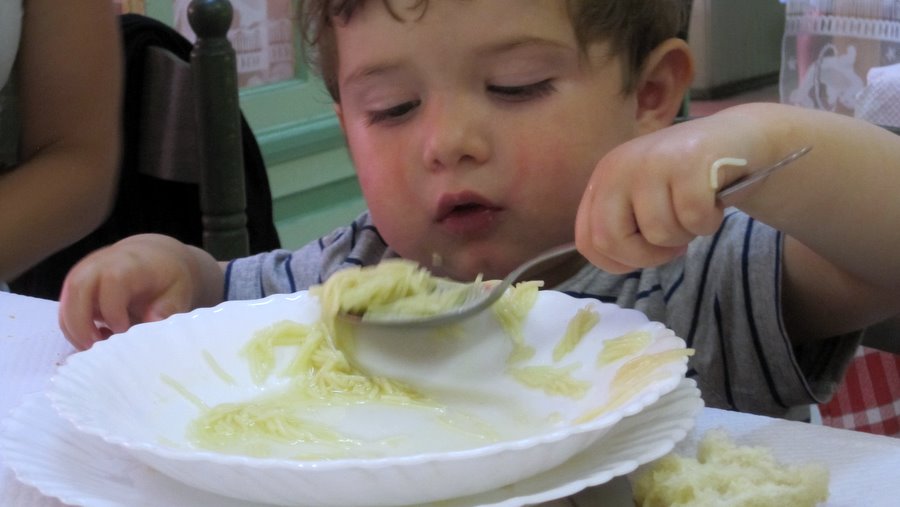
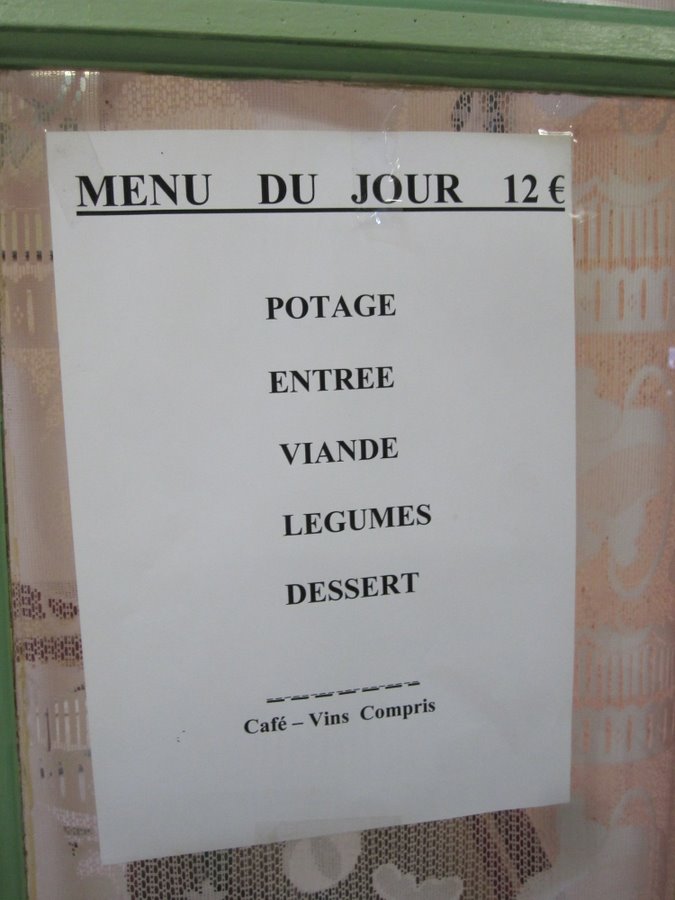
This was in a town called Vic en Bigorre, where a market-stall-manning local I asked for a restaurant tip pointed me in the direction of a place called Le Familia, just next to the main covered market. The menu was exceedingly promising, reading, in its entirety: potage, entrée, viande, legumes, desert – €12, vin et café compris. For the non-French-speakers among you, that’s: soup, starter, meat, vegetables, pudding, with wine and coffee thrown in, for €12. The choice, such as it was, was thus: red wine, or rose? They didn’t even have white, that’s how little choice they offered – though they did agree to knock something special up foodwise for the kids (namely a thick slice of ham and loads of extra salty chips). One of the people I was with was vegetarian; she was given an avocado to start (and a lettuce leaf, to be fair. Plus they had graciously sliced the avocado in half and removed the stone), and for her main course got exactly the same vegetables as everyone else (chips and brocolli), only without the viande.

I basked in the authenticity of it all, as the room filled up with pensioners sitting alone and the occasional relaxed couple, while the families who had the foresight to book basked in the small pavement terrace. Everyone was welcomed by name, clearly enticed to return by the crazy prices (not the food, so much, though it was fine). The toilets were dirty, the service brusque. I loved it. Go.

(But don’t ask for ice cream for desert, because you get the grottiest Wall’s gunk imaginable, and they make pretty good rice pudding and crème caramel themselves)

In Britain, of course, where duty on a bottle of wine, plus VAT on that duty, is £2.17 (with VAT still to pay on the cost of the actual wine), and where restaurants think nothing of charging three times retail prices (or more) for wine, it is pretty much impossible to get a single bottle of plonk, however hideous, for the price that Le Familia charge for a well-lubricated four-course meal. Infuriating, and I might be more inclined to protest about it as well if I weren’t still so ruddy full.

This is probably the best-timed holiday I’ve ever had, coming as it does at the end of a period of loopy work pressure (serves me right for taking a big freelance commission I probably should have avoided) that coincided with a fairly stressful house-buying process – we exchanged the day before we flew to France. Sadly, the moment it ends I’ll be cast headlong back into an even more intense period of already-accepted freelance work coupled with preparations for actually moving, which happens a fortnight after our return. Which is why I haven’t been doing much blogging of late. Sorry. Normal service will be resumed shortly.