Category Archives: Uncategorized

Tapas Fantasticas!

(Actually the tapas were a bit ropey, but the wine was nice)
I recently received a press release advertising an event called Rioja Tapas Fantasticas, which is going to be held later this month, at a point when it will hopefully have stopped raining. At this event, punters will be able to sample wines from rioja and food that might suit them – at the same time! And not only that, there’ll be other stuff too. Would I mind terribly, the PR asked, if they sent me a couple of bottles?

Tapas fantasticas? I said, surely not the same Tapas Fantasticas that was named medium-sized event of the year at the UK Event Awards 2010? Well no, I wouldn’t mind.

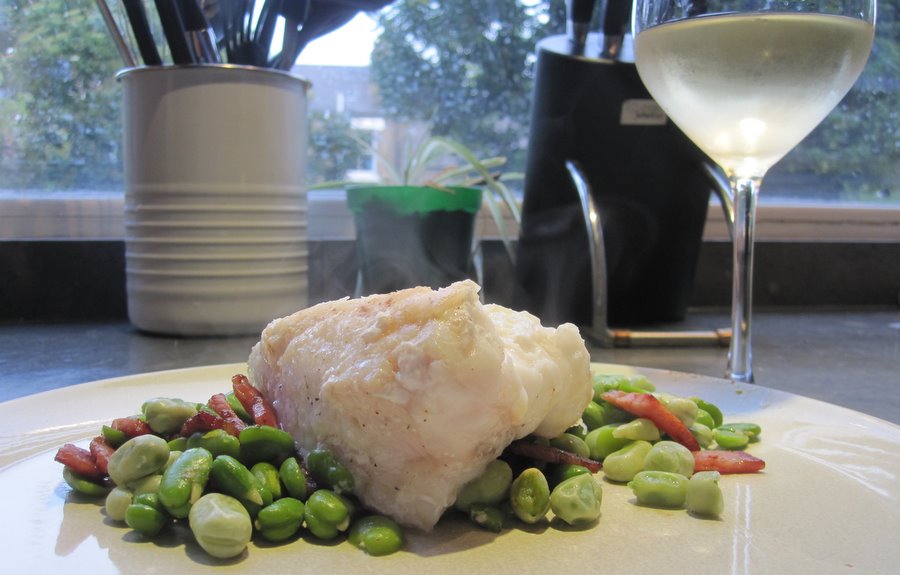
And what’s more, rather than just drinking these wines, I decided I should at least go to the trouble of making some tapas-style edibles to go with them. They sent me a bottle of Marques de Caceres Antea 2009. I went back to the press release. “This rich and complex white balances intense fruit with vanilla oak,” it read. “Try it with monkfish and broad beans.”

So, as you can see above, I did. And the wine was lovely. The monkfish and broad beans, though, was rubbish. As if prepared by a total idiot. Of course I couldn’t be arsed popping every bean out of its milky skin – I mean, really? – but that wasn’t the problem. It was just terrible, a flavourless, artless mess. Mainly because the “sauce” was so disgusting it never even made it to the plate. This poor, beautiful fish died in vain. The poor bycatch of the beautiful fish, which had already died in vain, had actually died in double-vain. In an incredible amount of vanity. The wine, some of which I wasted on the “sauce”, improved it, but what this dish really needed by way of accompaniment was a bin.

White rioja is terribly trendy at the moment. It’s this year’s alternative to sauvignon blanc, the clean, characterful but not-yet-cliched white-of-choice for the summer months. This one is ordinarily £9.99 at Majestic, but currently down to £8.49 if you buy two (and available elsewhere for closer to the offer price).  I genuinely like it, packed as it is with grapefruit zest and citrus oil, with a dash of cream from the evident but not aggressive oak. Once I’d stopped eating I felt it perhaps lacks a little crispness and acidity to get the mouth tingling by itself, but it’s impressive value at its (discounted) price, and very good with food. Even bad food.

Tapas Fantasticas!
Dates: Saturday 25th June (12pm to 8pm) and Sunday 26th June (12pm to 6pm)
Location: Potters Fields Park, on the South bank of the Thames between Tower Bridge and City Hall (entry behind City Hall, accessed from the More London development)
Address: Potters Fields, Tooley Street /The Queenswalk, Southwark, London SE1 2AA
Nearest tube stations: London Bridge or Tower Hill
Interweb linkodrome: www.riojatapasfantasticas.co.uk

Domäne Wachau, Grüner Veltliner Achleiten Smaragd 2008

Smaragd. As words go, it doesn’t exactly entrance. It just sits there, senselessly, looking like a spelling mistake. Even as words in foreign languages go it is unusually unappealing. The most popular wines are pretty much united by their possession of names that sound pretty good even when coming out of an English mouth: Chablis; Pomerol; Vega Sicilia; Chianti Classico. Here is one that sounds like the Swedish Chef sneezing, and it is one that the nation of Austria has chosen for some of their finest wines.

This Smaragd is sitting upon a bottle of Domäne Wachau Gruner Veltliner, the basic version of which is one of Waitrose’s summer bankers, a fresh, crisp, saline face-slap of a wine. This one, though, is more than twice the price, a fact I must admit I had pretty much forgotten when I decided to open it. I was expecting something along the lines of the basic model, but discovered a very different beast, a honeyed golden colour and with a host of new flavours: lime, dill, lychee, green apples, and a kind of deep, slightly glutinous, lingering savouriness that I’m afraid reminds me a bit of bogey. In a good way.

So what is Smaragd? It’s the ultra-strict top classification for white wines in the Wachau. Domäne Wachau use it for a handful of single-vineyard sites (of which Achleiten is one), where they pick their grapes only in late October or early November for “ultimate ripeness and flavour concentration”. The wines are built to last for a decade. It’s also a small green lizard, one of which is pictured above. This is impressive stuff, complex and contemplative and an incredible contrast with their basic wine, worth a splurge simply as a learning experience. Rubbish, rubbish word though.

The President, the Queen and the offensive drinks bill

Question: What is the connection between Barack Obama, the Archbishop of Canterbury, Helena Bonham-Carter, Lord Coe, Tom Hanks, Janos Csak (the Hungarian ambassador to the UK), Richard Branson, Ken Clarke, The Lady Phillips of Worth Matravers and Kevin Spacey?

Answer: They all drank £800-a-bottle Burgundy last night, and I paid for it. And you helped out too, quite probably.

Sure, when there are important visitors in town we should want to show them a good time. We might decide to give them some decent food and a bit of fine wine. But there is a point where a bit of basic generosity tips into unacceptable excess. Good wine costs £20 a bottle. Very good wine costs maybe £50 or £80 a bottle. This, though, was Domaine de la Romanée-Conti Echezeaux 1990. This isn’t just a decent bottle of Burgundy, it is a great bottle, from the most famous producer. It is generally treated with reverence, and deservedly so. It should not be served over dinner to 171 guests, washed away on a tidal wave of wine that also included English pink fizz (£25 a bottle), grand cru Chablis (£45), Champagne (£45) and vintage Port (£90). Never.

If such a quantity of incredibly fine wine had been so wastefully poured away by some Russian oligarch or Saudi oil baron, I would have considered it an act of heinous excess, but one over which I have and deserve no control. But this was a state event, funded by the taxpayer, at which the Chancellor of the Exchequer may well have blathered on to his unfortunate neighbours about the terrible state of the economy and the need for us all to tighten our belts. It is not just jealousy that makes me consider it somehow hideous (though there is, of course, jealousy).

Many people who buy wine for long-term storage will at some point have luckily happened upon one whose value rises so significantly before it is ready to be consumed that they are forced to ask themselves whether they can possibly justify opening it. There is no reason why the state’s own wine cellar should not also be subject to the same questioning, and for me there can only be one answer. If the nation has a fat store of classic, super-premium wine then it should either be sold off for everybody’s benefit, or it should be distributed a bottle at a time to appreciative citizens chosen by lottery. It is not OK for a few dozen rich people simply to open it all up one night. We also had a store of gold (and still do, just not as much), and when the chancellor decided the time was right, he sold it. It was not melted down and given away to the Lord Mayor of London and a small handful of old Etonians.

The world of fine wine is one of the least socialist parts of society. The best stuff will always be consumed by rich people who aren’t me. That’s the way it is, and I can cope with it. But that doesn’t mean that we, a nation that can’t afford to fund libraries or Sure Start centres, should be stumping up the equivalent £29,000 (a very conservative estimate, assuming everyone had one small glass of each wine and there was no wastage) on the drinks bill of the President and his pals. While Britain may eventually gain in tourist dollars from the pomp and pageantry with which we welcomed him, it cannot be right for he, the queen, our cabinet and their guests to drink away a teacher’s annual salary in a single evening.

And I bet half of them didn’t even like it. Or notice it. And that, perhaps, is what hurts most of all.

First of the Yorkshire wine

A vine, a bud, rain, grey skies – this is Leventhorpe Vineyard, just outside Leeds, in mid-May. Yes, that Leeds. The one in Yorkshire.

I spent last weekend engaged in one of my more unlikely wine tours while researching an article for next weekend’s Guardian travel section, and a very interesting time was had by all. Well, by me, mainly. There are seven vineyards in Yorkshire and most of them are pretty new, having been established in the last five years. Because they’re so northerly, and hence cold and wet and stuff, they have to grow varieties you haven’t really heard of before, bred specifically to succeed in those conditions: ortega, siegerrebe, rondo and solaris are the most common names. And these funny-sounding grapes make funny-tasting wine, stuff that swishes around your mouth behaving quite unlike any wine that you’re used to.

I tried my best to keep the most open of minds. They might not taste like what your brain tells you wine should taste like, but they sometimes still make for a perfectly enjoyable alcoholic beverage. The advent of solaris, a terribly modern German-bred grape that ripens early and with loads of sugar, has allowed Holmfirth Vineyard to produce a 100% solaris wine that naturally reaches 13% alcohol and is water white, steely dry and admirably clean and bright. Ryedale make a couple of very decent rosés. Leventhorpe make a seyval blanc of some repute.

But it’s not just about the booze. Nobody plants a vineyard in Yorkshire without have a pretty good story to tell, and I’ll remember the people I met on my trip long after I’ve forgotten their wines – and I don’t mean that as a criticism of their product. There’s one winemaker, for example, who has dedicated much of his life to vines, is absolutely obsessed by them and everything about them, but refuses to drink for fear of getting a deathly headache. Sometimes the conversation is more sparkling than anything that comes in bottles (though having said that there wasn’t any fizz to be seen, though there will be soon: at least two of the vineyards will release their first sparklers in 2012).

I’d encourage you to drop in on one, if you get the chance. But all I can add for now is that if you want any more detail you’ll have to click here, or buy next Saturday’s Guardian.

Natural wine’s big weekend

This weekend the Natural Wine Fair will be held at London’s Borough Market, marking perhaps the moment when the wine industry’s hot topic of the last couple of years crossed into the very mainest stream. But even if an increasing number of people are aware of its existence, they’re still unlikely to be loading their trolley with Tesco’s Finest Natural Fitou any time soon, and here’s why:

1) Nobody knows what “Natural Wine” means, even the ones making the stuff

2) Most people think that all wine is pretty natural, so what’s the big deal?

3) Making wine naturally is more expensive than making wine unnaturally, and more expensive wine is definitely not as good as more cheap wine

4) Some of it tastes pretty wild and funky, looks pretty weird and seems a bit unstable. If people want something that seems wild, funky, weird-looking and a bit unstable, they’ll go to see Bootsy Collins.

5) People with beards get very passionate about it

Of those, the first is the key issue. It is very hard to take seriously such an apparently disorganised organisation, but the truth is there is no organisation, just a hotch-potch assemblage of vaguely like-minded winefolks. Things might start to look up once this is resolved, firstly because it seems bizarre that grapes can be certified organic but that no system exists for noting the wineries whose approach continues along similarly chemical-free lines once they are plucked from their vines, and secondly because they’ll have a logo to stick on bottles. And everybody loves a logo, especially when it’s on a sticker.

First there’s some arguments to be had about precisely how hardline a winemaker has to be to qualify. Can they use sulphur dioxide, a common stabiliser throughout the winemaking process and especially at bottling, and if so how much? Can they start the fermentation process with a commercial yeast? Can they add acid, or sugar, or use oak chips?

As for the wines, they’re impossible to generalise. I’ve heard some people say that they “don’t like natural wine”, a concept as bizarre as saying they “don’t like socks”, because some of them are dirty. But I’m no less bemused by those who say that they don’t drink anything else, and those people do exist, because there are plenty of intense, provocative, interesting wines made outside the natural wine umbrella. The truth is that there are some brilliant natural wine, some dodgy natural wine, and some downright baffling natural wine, but the very best are really inspiringly delicious.

So, a few tips: I’ve been impressed in the past by the cheaper wines made by Cos in Sicily (Frappato and Cerasuolo), delicious and bright and in no way scary (but don’t think that I’ve been unimpressed by the more expensive ones – I just haven’t tried them), the very good value wines of Domaine Fondreche in the Rhone, and the outstanding but pretty expensive Brunello from Paradiso di Manfredi. At a recent tasting of natural wines held to drum up support for this weekend’s event I really liked a 100% carignan from the Languedoc called Terre Inconnue Leonie, an almost entirely useless tip because it’s made in tiny quantities and you can’t buy it, and a soft, full, lovely and not at all scary Marsanne/Rousanne blend calles Les Muriers, from Mas Bruguieres.

But there are also the wines that are a bit out there, guilty perhaps of having an excess of personality. They’re fun to try, but probably a bit miserable to be stuck with for a whole evening. If anything the pot-luck nature of “natural” wines means it can only be a good thing to be somewhere with little bits of lots of them and no chance at all of getting stuck with one you don’t like. In other words, go to the fair this Sunday and see what all the fuss is about.

What next for The Wine Society?

I’ll just put this out there: I like the Wine Society a lot. I liked them even before they invited me over, let me try some wine and then fed me roast beef and really very good gratin dauphinois. They provided the wines for my wedding, and their mountainous delivery man, who is capable of carrying a full case of wine under each arm apparently without serious exertion, has been a fairly regular visitor chez CF ever since. Their prices are good, their range is excellent and the quality pretty reliable. And I like that they are a mutual, that they don’t seek to make profit for some faceless white-cat-stroking imaginary Dr Evil.

But they have an ageing customer base, steadfastly refuse to advertise and have only one shop in Britain, and that’s in Stevenage, and you can’t buy anything unless you’re a member (though anyone can join, for a one-off fee of £40). They are worried enough about their future to have invited a handful of bloggers to their Hertfordshire home, where they tried to impress us with their wines and to see if we had any clever ideas about how they can get bigger. So let’s run through the wines, quickly: they showed only a handful of their two own ranges, the basic Wine Society label, and the top-end Exhibition brand. All were pretty good representations of what they were (though the Chilean sauvignon blanc was a bit of a charicature), and the Exhibition range contains some absolute gems. They normally say who produced the wines (Craggy Range, say, makes two of their three Kiwi pinot noirs), but emboldened by this positive tasting I would buy anything bearing an Exhibition label with confidence. As we were told, “members count on us to never give them the chance to step in something nasty”.

So on to the future. I walked around, puzzled as to why they’re so keen to expand. The thing is, they’re already enormous. I kind of knew this already, but didn’t really appreciate it before getting the chance to look round their Stevenage warehouses. The quantities of wine they hold, and the amount that leaves them daily, are pretty awesome. Here’s some evidence:

Cases of wine, ready for packing

Full cases, ready for the vans

The Wine Society: A few cases of Chateau Lafite

The Wine Society: Warehouse No4

Britains second tallest warehouse, and a big fork lift truck

The warehouse above is just one of four, albeit the biggest of them. The forklift trucks are so enormous that the only way of getting them inside was to bring them in in bits and build them right there. The scale of this place is basically incredible. They could be bigger, and there are probably quite a few wine lovers who’ve never heard of them, but this lack of ubiquity is also part of their appeal. They should be wary of becoming overly pushy, because they may find it counter-productive. The gentle, mannered Britishness of the whole enterprise might not be very 21st century, but it’s also, somehow, right. And the contentment of their existing members has to be the very greatest priority, given that their recommendation is the Society’s only form of advertising.

But, since they’re asking, this is what I’d like them to do: Open a Wine Society House in central London. A wine shop and relaxed eaterie (no tablecloths) on the ground floor,; a big, comfortable sitting area upstairs, where people can sit in small groups, chat, drink wine, play cards, whatever; some kind of large-ish area for public tastings in the basement and a couple of private meeting/drinking rooms somewhere. Members only, though they can bring a few guests. Ideally a late license. Orders can also be made for collection from the House, or be made there for home delivery. And if it works, smaller versions in other cities. That’s all. I’d come, often.

Côte-Rotie, points and prizes

Recently I went to an illuminating Côte-Rotie tasting at Roberson, an excellent wine merchant on Kensington High Street, one of a series of high cost but high reward evenings they host there. Côte-Rotie is an appellation in the Northern Rhone that produces syrah-dominated red wines, often brightened with a splash of the white grape viognier. Like pretty much everything from the northern Rhone it’s normally too expensive for me to buy – at Majestic the cheapest version costs £40; at Berry Bros it’s £32.65; the Wine Society, to be fair, has three between £20 and £30 (and I actually bought one there a few weeks back for £25); Roberson themselves have a small selection that starts at £300 a bottle and ends on £1,020 (reduced from £1,335). The upshot was that I tried more Cote-Roties in this single evening than in the entire rest of my life.

We tried 10 wines in all, served in three flights and ranging in retail price from £49.95 to £395, for the most famous and celebrated wines of the appellation. With my inexperience in wines of this style, and at this level, I was a little nervous about how my poor tastebuds would shape up. But things started pretty well as we were given a few minutes to quietly try the first three wines, and my conclusions broadly mirrored the consensus of my presumably rather more experienced co-tasters. Of these, a 2001 Rene Rostaing “La Landonne” was rather brilliant, in a complex but still understated way, and smelt rather a lot of zatar, I thought. My favourite of the second flight, again in line with popular opinion, was a 1998 Delas “La Landonne”, made from fruit from elsewhere in the same vineyard, even though it smelt rather a lot of damp swimming goggles.

My confidence buoyed by these minor successes, the final flight and unrivalled highlight of the evening was served: a full line-up of 1998 Guigal’s “la-las”, the nickname for three single-vineyard Côte-Roties, La Landonne (again), La Mouline and La Turque – incredibly famous wines that I never thought I’d get my mitts on, and the wines most often awarded a maximum 100 points by notorious wine critic Robert Parker. Though only one of the three 1998s – La Landonne – had got the full haul, this was my first chance to taste a 100-point wine.

And I must say I was baffled. Of the three I preferred La Turque, but I found them all a bit unyielding and unlovely. Give me the Rostaing Landonne, for a “mere” £80 a bottle, over these £400-a-pop leviathans. Perhaps I lacked the experience to judge how they will evolve, because they’re certainly not at their peak yet – but I couldn’t find enough fruit to make them particularly interesting either now nor in the future. I’m prepared, though, to accept that I am wrong. Pretty much everyone else disagreed.

And so my conclusion has to be that I either need to drink many more 100-point wines, or no more at all. And that, while the best of Côte-Rotie is pretty excellent, if you want to drink some syrah there’s much, much better value to be had elsewhere.

The week in wine

This blog started as a place for me to keep notes of what I was drinking, and what I thought of it. It’s largely lost that purpose since, and is none the worse for it in my opinion. But it’s still my blog, and I think there’s a place for some brief record of my humdrum at-home drinking. So here, then, are my wines of the week:

* Domaine des Escaravailles La Ponce Cotes du Rhone blanc 2009 – this week’s sunshine demanded fridge-fresh white wine, but nights are still a little chillsome. So summer’s ultra-dry quenchers must wait; for now I want a white with a little weight. This delivered that, lashings of creaminess and a slight green apple spritz, getting the texture so right that a slight lack of genuine flavour was easily forgiven. From Theatre of Wine, the extremely exciting new(ish) wine shop near Tufnell Park.

* Tahbilk Marsanne 2007: The Escaravailles was such a success that the following night we went for a relative, in the shape of Tahbilk’s ever-reliable Marsanne (one of the grapes used in La Ponce), a fair bit lighter and crisper than the CdR. One to look out for when Waitrose are next knocking 25% off.

* Maury Solera 1928, Case number 849: A rare sticky, dewaxed and uncorked on Saturday night. Remarkable stuff, this. Nutty and complex, a wine to savour and, if you’re so inclined, to ponder. Delicious. £15 for 50ml (from The Wine Society), so not exactly cheap, but there’ll definitely be another bottle in my next case.

My only other vinous activity was an outing to said Wine Society on Tuesday, of which more shortly.

Oddbins – even odder outpouring of grief


Everyone’s busy writing about the demise of Oddbins, and what struck me more than anything, reading all the obituaries, is the fact that all our wine writers appear to be from the same generation, the one with all the hazy, romantic memories of their local store. You can’t spit at a wine tasting without hitting someone who with very little prompting will happily tell you about that bottle of 1981 Grange they bought for a tenner, or how they once snaffled a case of Beaucastel for £2.95 and it came with a free limited-edition Gerald Scarfe lithograph, or how their first job in the wine trade was as shelf-duster in the Basildon branch, and now they’re chief winemaker at Chateau Lafite.

It is a decade since Oddbins was bought by Castel, the Nicolas-owning Frenchmen widely credited with performing a goodectomy, that is, a surgical removal of all things good, on the once-popular chain, notably removing all their decent wine, half-filling their shops with rubbish and just leaving the rest empty. It just so happens that my interest in and knowledge of wine has blossomed precisely as Oddbins has withered, and there are surely a great many twenty- and thirty-somethings who are reading this emotional outpouring, scratching their heads and wondering what all the fuss is about.

In my time Oddbins has offered little beyond its fairly pleasing unvarnished-floorboard-and-hand-scrawled-sign aesthetic. I did quite like the fine wine store in Farringdon, with its musty, damp, authentic aroma, but I very rarely bought anything there. More recently, and as widely pointed out elsewhere, the chain’s (over)pricing policy, trying to encourage six- or 12-bottle purchases despite town-centre locations often without convenient parking, defied logic. A year or so ago my local store got a partial makeover, by which I mean that they installed a little wine fridge that allowed them to keep open and theoretically unspoiled bottles with which to tempt visitors. I’m sure I was just unlucky, but on the small handfull of occasions when I’ve been into the shop since I tried a variety of deeply unimpressive tasters. Thinking back over the last five years or so I can count the number of wines I’ve bought from Oddbins and genuinely enjoyed on the fingers of three fingers (Craggy Range Block 14, Two Hands Gnarly Dudes, Domaine Mas Theo Coteaux du Tricastin).

Perhaps someone half-decent will buy the chain and relaunch it, and the same reviewers will rejoice at the rebirth, and the opportunity to vomit out the same tired old memories the next time it all goes tits up.

Laithwaites, and the art of selling


There is a merchant who keeps sending me brochures, but whose wines I simply cannot buy. It’s not that they are worse than everybody else’s – after all, I don’t know – it’s just that I can’t stand the way they describe them. Too many exclamation marks. Too many over-effusive descriptions. Reading their brochures is like walking through an east end market, being assaulted by over-the-top sales patters from tradesmen all the way. In the end, you just ignore the lot of them, and go somewhere quieter to do your shopping instead.

“Lavish, barrel-aged Shiraz – from one of Oz’s most exciting young winemakers!” they cry. “Be quick to savour a gloriously mature 2002 Australian Cabernet from a 5-star winery!” they shriek. “The Gold-medal winning triumph returns, richer and smoother than ever before!” they yell. “Powerfully deep and as popular as ever, keep your glass full to the brim with El Bombero!” they squawk.

And then they add something about how not only do you simply have to buy this wine, but you have to do it RIGHT NOW! “Cellardoor-priced Aussie marvel and a must for red wine lovers – act now for this amazing one-off!” they yelp. “Rich, dark and thoroughly satisfying. Don’t miss this treat from one of Portugal’s finest!” they bellow. “Seductive and elegant arrival from one of Central Otago’s best – secure your share today!” they whoop.

Then there are the constantly pushed case “deals”: more of the same, only with more exclamation marks than usual. As much as anything, I detest being sent an apparently generous £50 voucher only to discover that it is redeemable against only one, pre-selected mixed case, composed entirely of basically the same red wine only with different labels on.

I reckon I could spot the average Laithwaites description at 50 paces – they bring me out in spots and induce a chronic case of the shakes. I am Laithwaitesdescriptionphobic. So here’s a little test, for interest’s sake. How clear a style do Britain’s major wine retailers have when they describe a wine? There aren’t many wines that are available in every single major retailer, but Bollinger’s Grand Cuvée is one. Can you tell which retailer is responsible for which description?

Can you spot the patter pattern?

Click here for the Cellar Fella sales patter test!