Category Archives: Uncategorized

Champagne: time for the bubble to burst?

Us Brits, we love our Champagne. More than ever, it seems, with imports up 16.3% in 2010 to 35.5 million bottles. That’s more than twice as many bubbles as America, with their Hollywoods and their New Yorks and their Texan oil barons and Wall Streets and all their very many people. The link between celebrating and popping champagne corks is unbreakable, one of the great public relations triumphs of all time. But it is something that leaves me utterly perplexed.

Last week the Champagne Bureau put on their annual tasting in London’s historic, astonishingly well-placed and bewilderingly lavishly ceilinged Banqueting House. Eighty-three producers, 250 wines, 3,000 bottles opened and one over-riding reaction: a lot of this stuff really stinks.

It can be so aggressive, attacking you with a triple whammy of ultra-cold temperatures, wild acidity and tiny, vivacious and bountiful bubbles, and then socking you with madcap fruitiness, all before letting you down with a bitter aftertaste. At its worst, and I’d probably put a good 25% of what I tried in that category (easily outweighing the ones that seemed genuinely pleasurable), this is some of the most unpleasant wine that you can get. The only good thing about a lot of champagne is that, unlike other disgusting wine, you can get away with mixing it with something actually nice, like orange juice, or just shaking it a lot until it pours itself over the floor and you can get rid of it using a mop.

I tasted just a fraction of the wines on show. Perhaps I was simply unlucky. But the Wine Society’s Marcel Orford-Williams, who approached the tasting somewhat more systematically than myself (I spent a good 20 minutes just wondering around marvelling at the number of champagne bottles around, and then I noticed the ceiling – “the most important painting set within an architectural context in England”, says TV historian David Starkey – which was another 20 minutes, and I only had an hour or so), used the word “horrid” to describe the wines of 23 different producers. Readers are exhorted to “leave alone” the offerings of a further eight, seven are either “awful” or “dreadful”, there’s a “dire” and one “unspeakably nasty”. Perhaps I was lucky – the worst vintage champagne I tried, a 1998 from Arlaux (at £60 a bottle), got a relatively enthusiastic “barely decent”. Some people have criticised his brevity and bluntness, but I was there. I tasted the same old rubbish, or at least some of it. Tim Atkin, without being so blunt, said that “the average quality was disappointing”.

This wasn’t supermarket own-brand rubbish, either. This was top-end stuff, the cheapest of it fetching the kind of prices that would pretty much guarantee you some degree of excellence from any other corner of the wine world.

But it wasn’t all bad. Pol Roger, my favourite major Champagne house, didn’t disappoint, from their “basic” house champagne through the vintage to their famed but pricey Cuvee Winston Churchill (the first time I’d tried it) they showed how good Champagne can be – relaxed, complex, nuanced, genuinely luxurious.

But in the main, there were only two things to marvel at – the ceilings, and the idea that us Brits, so reticent to shell out a penny over a fiver for ordinary table wine, will gladly pay £20 or more for such nastiness, and still consider it a cause for celebration.

Pleasure, and pain

Wine has brought me a lot of pleasure, it has helped me to make friends, allowed me to meet fascinating people in wonderful places. But it has also given me gout. Not long ago, the only person I knew who had suffered from gout was Falstaff, the rotund rogue who pops up in a few Shakespeare plays, and now here I am, limping about like some mead-addled Elizabethan. Lifestyle changes are apparently required. Could this be the end of my wine adventure? Well, several other lifestyle changes will obviously need to be tried first, but dull as a life without wine would certainly be, if that’s the only way of guaranteeing a life without this ruddy pain then it’s a deal worth making.

However, I’ve had a good look at the full list of dietary factors that could contribute to an attack of gout, and for the moment I’m blaming the lentils.

Jacob’s Creek – a blast from the past

Jacob’s Creek, I’ve always thought, is to wine what Ladybird is to books, Metro is to newspapers and Justin Bieber is to music: it’s a decent place to start, I suppose, but a terrible place to end up. I wonder how many dedicated wine-lovers of the 25-45 age bracket got through a decent amount of JC, back at the beginning. I’m certainly guilty as charged, and I think I’m one of many. Many millions, perhaps – someone’s got to be getting through the stuff, after all.

But all JC ever did for me, back when I actually drank it, was give the strong impression that there was something better, much better, out there for me. Its initial appeal was that this was a much improved method of getting drunk than the standard student mainstays of cheap vodka (too imprecise – in the time between me drinking enough to get me drunk and it actually making me feel drunk I would always drink some more, and end up feeling very sick indeed) and beer (too fizzy, too many trips to the toilet). Even then, though, wine represented a way of making the process of reaching the destination just as enjoyable as the destination itself. Now there is (almost always) no destination at all; it’s all about the process. And that makes the process really important. Too important to waste it on Jacob’s Creek Chardonnay, to be sure.

Presumably there are people who try one of the basic wines in Jacob’s Creek’s range, like it, and then never drink anything else. Just as there are people who spend their lives drinking Carling. I do not understand those people. Do they not look at other wine bottles, all those other bottles, and wonder if their contents might be better? Or at least more interesting?

But Jacob’s Creek is changing. It is becoming more unpopular, for a start – now the sixth biggest-selling wine brand in the UK, overtaken last year by First Cape and Echo Falls, with an 18% fall in sales nationally and a 10% drop worldwide (they now shift just the 7.1 million cases a year). And it is going posh. In new markets they are deliberately avoiding the cheap plonk pound – the idea of ordering JC in a restaurant would seem bizarre to most Brits, but I’m told that in China 60% of sales are in restaurants and bars. The recent downturn in sales – not all bad news: the accompanying 10% price increase led to a 1% rise in profits – was described by parent company Pernod Ricard as “reflecting our premiumisation strategy for the brand”. Here, while they promise “no major changes to the classic range”, they have rebranded and relaunched a range of Regional Reserves, adding geography to grape variety to “target the more evolved wine consumer”.

They’re very much on-trend there, with regionality also a key message of the recently-launched A+ Australian Wine campaign. And the really good news is that the wines are a big step up from the standard offerings too, with only the pinot noir a genuine disappointment (Not undrinkable, but I found it didn’t taste much like a pinot, but it did taste a bit like dirt) and a couple – particularly the Barossa Riesling (the Barossa might not be particularly well-known for its riesling, but 80% of the fruit comes from the Eden Valley, only just below the threshold for putting that region on the label instead) and the Coonawarra Cabernet Sauvignon, were pretty impressive. RRP for all the wines in the range is £9.99, but if you’re lucky or patient you may be able to find them at a couple of pounds less – only fractionally more than the standard range, but of considerably better quality.

Because of its place in my own wine history Jacob’s Creek, alone among the big brands, retains a place in my affections, and I suspect that many others feel the same. I don’t know whether he is aware of that, but what with the giant marketing spend that sees its logo plastered around the courts at the Australian Open and Wimbledon, plus the need to produce a little (well, 200,000) over 85 million bottles of wine every year to fill those 7.1 million cases, their winemaker-in-chief, Bernard Hickin, is under enough pressure already. Not that he showed any signs of stress as he picked the remains of his second steak of the day from between his teeth after dinner a couple of months back.

At this level of production, there isn’t much room for romance. Thus he spoke less of his personal vision than the need for his products to “evolve to meet the contemporary needs of the consumer moving forwards”. What this means – a boon for anyone who last tasted JC’s chardonnay a decade and a half ago – is much less oak – “We want wines with true varietal expression.” If Hickin does feel pressure it is around the Barossa shiraz, by some margin the biggest-selling wine of the range. “The wine that really resonates with the consumer is the shiraz,” he said. “It’s the wine we have to get right.”

And they have, producing a nailed-on, typical, reliable if not exactly thrilling £10 banker. And if anyone genuinely doubts JC’s ability to produce decent wine, a drop of their 2001 Johann shiraz-cabernet, the star of an impressive premium range that frankly I never knew existed – £31 is the cheapest I can find it at – should put them right.

They’re doing a lot right, in short. But they’re still Jacob’s Creek, relic of my student days, as much a part of my past as nightclubs and 50p-a-pint drinks promotions. If I let that logo back into my house, it’s only a matter of time before I’ve got a Magic Eye poster on my wall and a 1,000 word essay about the Comedia dell’Arte to write. And that lazy prejudice is why, while Jacob’s Creek will always be close to my heart, it might well be stuck some way from my wine rack.

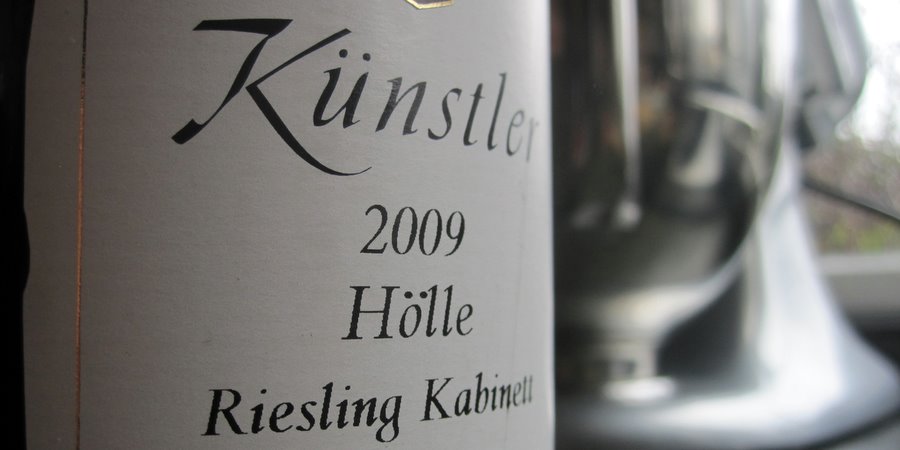
Project riesling: Kunstler Holle Riesling Kabinett 2009

Here’s a wine I’m only writing about because I’m drinking it, at home, right now, and it’s making me happy. I don’t know many people who buy German wine. The bottles have funny shapes. Tesco’s don’t stock many, and never display them prominently. The labels are full of words, some of them with a lot of syllables, and many of them written in comedy gothic fonts, like the titles from a 1940s version of Dracula. Indeed, I’m one of those people who don’t buy German wine, as a rule. The last time I bought one I was in Germany, and didn’t have a lot of choice about it.

I’m not sure what it is about riesling that turned me so strongly against it. Clearly, deep in the recesses of my mind lurks some pretty horrific early experience, a memory that my brain has had the good grace to repress but my subconscious won’t let go. But again and again I’m finding examples of impressive quality at decent prices – even Jacob’s Creek make one (of which more shortly) – and here’s another. Green apples, elderflower and apricot on the nose, gentle acidity on the palate, dry (trocken: the first German word for any wine-lover to learn) but in no way austere, citrus zest and those apples again. It’s generous and delicious and cost a bonzer £11.24 from Waitrose in their last 25% off everything extravaganza, and precisely £3 more than that online now. Stylish stuff.

Nopi – a salute to salad

Another day, another exciting London restaurant launch. Nopi (short, in the manner of Soma, the district of San Francisco that is situated south of Market, for north of Piccadily) is Yotam Ottolenghi’s new creation, his first not to bear his name and, apparently, his first excursion into fine dining. Not very fine dining, mind: Yotam can’t or won’t compete with the likes of Heston on the refinement stakes, and offers a considerably more relaxed experience than anything you’ll get at the Mandarin Oriental – even if it is not, as a result, considerably cheaper.

One thing you pretty much never get in traditional fine dining establishments is salad, but Ottolenghi has made his name with them and continues to work in the unshakeable belief that vegetables can be delicious even when they are raw. And he puts up a pretty convincing case. So beef brisket croquets come with an excellent “asian” coleslaw, while fairly ordinary mackerel is made memorable by a salad of coconut, mint and peanut. There’s no need here for omnivores to order token vegetables, because they’re getting some anyway.

In two visits, in which I tried a good two-thirds of the menu, the only things I didn’t like were guilty of an identical crime, namely an excess of dairy-ness: a small portion of braised winter greens that had a fat blob of yoghurt oozing all over it; a dish of braised carrots and mung beans that came with just two tiny little baby carrots, but quite a lot of very strong smoked labneh, and a desert of vanilla rocotta with blackcurrants and rhubarb that had its cream-to-fruit ratio a bit wrong. Highlights: veal carpaccio; that mackerel; rice pudding studded with pistachios and sprinkled with rose petals; most other stuff.

Both my visits came during the soft opening, with everything (including wine) at half-price, and the menu clearly a work in progress – in the 48 hours between visits several things disappeared entirely and others changed remarkably, so an ossobuco that had an intense, preserved lemon tang on my first visit, for example, had almost no citrus left on my second. The first version might not have been good enough for Ottolenghi, but it was good enough for me to order it again.

Other positives: a good, bright space with comfortable seats; extremely friendly service; a kitchen that seemed impressively in control even with a packed restaurant on opening night; a good, interesting wine list (put together by Israeli blogger and former Bibendum staffer Gal Zohar) devoid of ego-bottles and spread between £19 and £70. Negatives: bewildering toilets that – and I’m guessing, but I can’t think of any other explanation – were bought on the cheap when a tacky 70s-themed strip club closed down, and fairly ambitious pricing. Most of the dishes pick up on the recession-era trend for cheap ingredients – lamb belly, pig cheek, beef brisket, mackerel, clams, brussels ruddy sprouts – but ignore the recession-era trend for cheap actual prices – £9 to £12 for meat and fish dishes, of which you’ll need at least three. Even given the West End location, the pricing seems a little bit optimistic.

But dammit if it isn’t a lot of fun. At half price, an incredible bargain. At full price, costly enough to make me feel a little bit guilty when I – inevitably – go back.

Riesling: age before beauty

Last week I bought a couple of bottles of Grosset Polish Hill 2009 for £15.50 each. This is a wine that inspired a 20/20 score from Decanter, who called it “an all-time great”. Matthew Jukes says it should be “savoured and revered”. It is widely regarded as the greatest new world riesling, bar none. With the possible exception of similarly-priced cult-classic Lebanese brawler Chateau Musar, if it’s possible to find the most famous and admired version of a single other wine style of any standing or ageability at such low cost, I don’t know about it.

The only problem is, I need to find somewhere to keep it for a decade or two. Young Clare Valley rieslings tend to be extremely dry, with wild levels of acidity. A bit like a naked sprint across a snow-covered field, they’re bracing and thrilling but not necessarily that enjoyable, really, when you think about it. They need time – quite a long time – to make good all their potential. At the A+ Australia tasting I went to a riesling masterclass with the Petaluma winemaker, Andrew Hardy, at which we tried a couple of Clare Valley wines from the fabled 2002 vintage which were only just starting to fill out, relax and discover the more generous, gentle toasty character that comes with a bit of bottle age.

The only problem is, you can’t buy mature Australian riesling. The oldest vintage of Grosset riesling currently available in Britain is the 2007, of Petaluma the 2006 and of Knappstein and Plantagenet 2005, to pick four big-name producers at random. It just isn’t there.

Last week I bumped into Hardy again at the Bibendum portfolio tasting and had a bit of a chat about the problem. The good news is that he has a plan, and the end is in sight, so long as you’re quite long-sighted. They would like to release mature riesling, and indeed have always held some bottles back for precisely that purpose, but are currently prevented from doing so by the high fault rate of their late-90s/early-noughties bottlings, which were still under cork. The first all-screwcap vintage was in 2003, and a batch of it will come on the market when it reaches its 10th birthday. So get a new diary and stick a flag in February 2013, because you might have some shopping to do. Their importers, Bibendum, will be the people to watch if you want to get your hands on something good (and rare) (and cheap).

In the meantime, look out for Grosset’s off-dry riesling, new to the market in 2011 – soft, luscious and rich with tingly but not abrasive acidity, it appears to have just a hint of sweetness (though with almost 16 grams of residual sugar per litre it’s 39.75 times sweeter than the bone-dry Polish Hill) and already, with no decade or two of hanging about, utterly marvelous.

Dinner by Heston – some quick thoughts

Two days after it opened, and on the day Giles Coren in the Times labelled it the best new launch in London for at least a decade, and possibly the best restaurant in the city bar none, and therefore the finest in the entire country, and thus the entire world, I had lunch today at Dinner by Heston, Heston Blumenthal’s new restaurant at the Mandarin Oriental. The food was very good indeed, but I think Giles has got a little overexcited about this one.

I think it’s a muddled launch, with loads of – and I’ll be frank – claptrap about the food’s historical origins cluttering the menu and confusing the issue. The food is modern in execution and design, its debt to history often small to the point of irrelevance. When a member of staff asked for our feedback, I asked him precisely what from the original dish remained in my main course – a 72-hour slow-cooked short rib of Angus known as Beef Royal (c.1720), which had apparently been borrowed from something in a book called Royal Cookery, written by Patrick Lamb in 1716. I was told that this was when the method of braising meat became popular. That’s it. Frankly, I think you’d have had a job chasing Heston away from his water bath even before he discovered Lamb’s oevre. The truth is that the food’s historical background, around which so much of the restaurant’s advance publicity has been based, and which sees every single dish on the menu accompanied by a date of origin in brackets, is usually so minor as to be almost irrelevant.

If Heston and his head chef at this new venture, Ashley Palmer-Watts, want to seek inspiration for new dishes in historical cook books, all power to their elbows. But unless you can tell me something genuinely interesting – and a 350-year-old book title is not enough – don’t bother me with it. I would strongly suggest that they either add historical detail to their menu (and I’d make Hawksmoor’s cocktail menu recommended reading in this regard), or they remove all mention of it. This is a pretty trivial complaint that could be easily remedied – a restaurant must in the end by judged by the quality of the food and service, both of which were impeccable – but I can’t be expected to fully embrace a new restaurant which is conceptually pretty seriously flawed.

The other thing stopping Dinner by Heston from streaking to the top of my chart kind of goes with the territory. It is tucked inside the Mandarin Oriental, a hotel in plush Knightsbridge, the kind of place that has people to open the outer doors for you, someone else to open the inner door for you and a whole posse of greeters, meeters and point-the-wayers littering the corridors. In between rising from our table and emerging onto the street well over a dozen people said goodbye to us.

Of course, this level of staffing does not come cheap – and neither will your stay. At £28 the set lunch (which we rather foolishly ignored) is a good deal, but don’t even dream of drinking. My wife and I each had a glass of wine. The cheapest red wine by the glass was a wallet-busting £9.50 for 125ml. My glass of riesling, only 100ml of it and very pleasant but far from lifechanging, cost £14.50 (plus 12.5% service) and was absolutely nowhere near the most expensive glasses on what is a pretty short list. London’s fine diners might be accustomed to this kind of mark-up but I continue to consider it something of a scandal, and don’t believe that it should pass without mention. And if Heston wants to play the fine dining game, where were the bonus mouthfuls of unexpected loveliness with which we are usually treated? Amuse my ruddy bouche, Heston!

Go. Eat. Enjoy. Drink your wine at home, and don’t swallow the history-book fairy tale.

Big brother’s little brother

My first half-hour at the A+ Australian wine tasting basically involved me walking around the then-still-quite-empty rooms, spotting labels familiar from countless fantasy wine splurges. I felt like a lust-filled teenager with a backstage pass to a Girls Aloud concert – this was the kind of stuff I read and dream about, and now was my chance to introduce myself properly.

But at the same time, I had the rest of my life to worry about. It’s all very well deciding that I quite like fantasy wine, but it would be rather more useful to find some more realistic dates. So which of these iconic wines, I wondered, have bargain brethren? Are there cut-price labelmates who share the same fine breeding, but not the elevated valuation?

And the answer, I reported to myself several hours, much shiraz and two rows of freshly-stained teeth later, was yes. And here’s a couple for you:

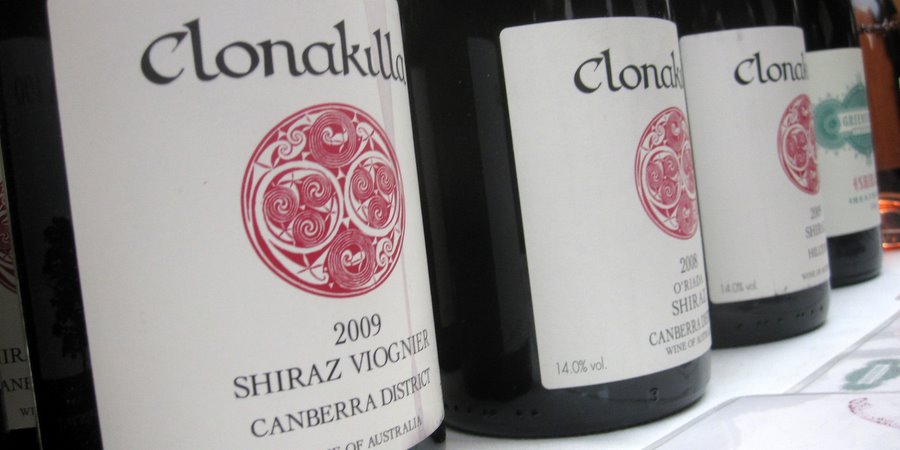
Clonakilla – The shiraz/viognier (RRP now up to £54.99, though widely available for £15-20 less than that) has been a subject of my vinous fantasies for a couple of years now, and this was my first introduction. Sweet, soft and instantly loveable, it’s certainly a fine wine – but the Hilltops shiraz costs in the region of £15 a bottle and is only fractionally less impressive, and was finer for me than the middle sibling, the O’Riada, at £31.99.

Mount Langi Ghiran – I liked their 2005 Langi shiraz (RRP £40) a bit more than the 2006 (£55), though the latter’s hard edges will be rounded out over time. But their basic shiraz, Billi Billi, is excellent value at £6.99 from Wine Rack (and just a little bit less excellent value at £8.50 from the Wine Society).

Jim Barry – Probably my favourite £10ish wine of the day was the Lodge Hill shiraz from this Clare Valley estate, full of leafiness and pepperiness and disguising well its burly 14.9% alcohol, it’s without doubt the best thing to be found in that temple of mediocrity and disappointment that is the Archway Co-op. I also liked the McRae Wood and Armagh shirazes, both from 2006, but they cost £45 and £89.99 respectively, and aren’t for sale in Archway.

Chateau Tanunda – The Everest, Tanunda’s top wine, comes in a bottle so enormous and weighty that you wonder if it’s a magnum. It’s not for sale here, but costs £100 a bottle from the cellar door, and heaven only knows what it would cost if anyone actually imported the stuff, so horrific would the shipping costs surely be. Presumably it is so named because it would have taken Sir Edmund Hillary three days to hike up it. But for a notional tenner (as you can’t get it either) their Barossa Tower was admirably light on its feet for a 14.5% Barossa monster.

And an exception to prove the rule Good breeding is a reason for optimism when approaching a wine, not for confidence. And to prove it, there’s Tahbilk. Probably best known for their whites, I tried their trio of shirazes and found the basic version (RRP £13.45) totally out of balance at 15% alcohol, while their ESP (£32.50) was worryingly mediocre and also a bit boozy at 14.5%, but the top-of-the-range 1860 Vines shiraz (RRP £85) was just 13% alcohol and correspondingly fresher and more elegant, a huge leap upwards in enjoyability. Don’t bother with their cheapos.

Man O’War Dreadnought Syrah

I’ll probably write a few posts about Australian wine in the near future, having blagged an invite to a particularly enjoyable tasting at the Saatchi Gallery yesterday. I got through but a fraction of the hundreds of wines on show, but enough to be a bit disappointed by some wines with hefty reputations and impressed by others that I didn’t know.

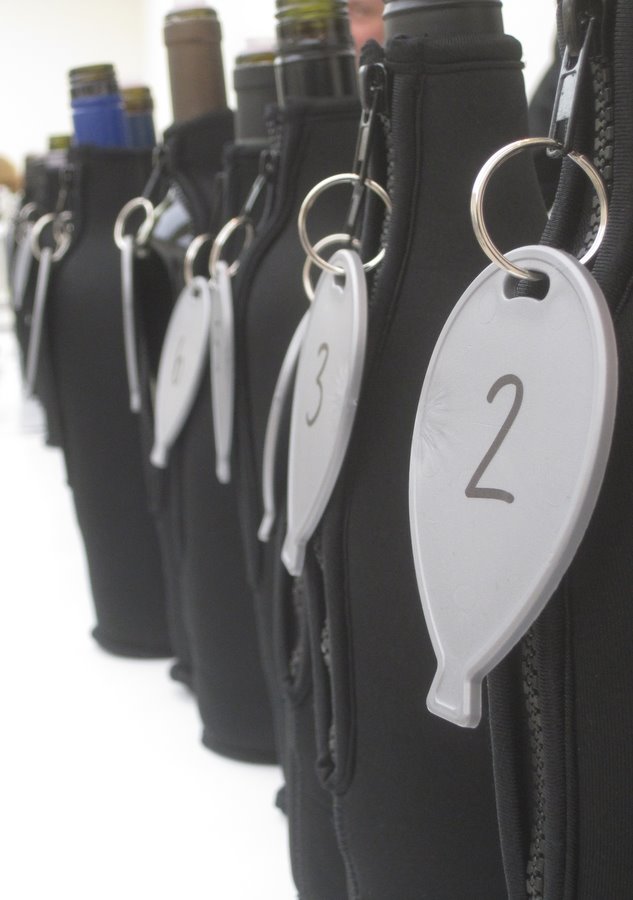
Upstairs, slightly away from the main event, a couple of tables were serving wine blind. One was an actual competition, where attendees were invited to work out which Australian subregion a selection of cabernet sauvignons were from. The other was just for fun, and featured a large line-up of Australian syrah/shiraz, with a few non-Aussie ringers thrown in to keep you on your toes. And, though I didn’t get through them all, it turned out that one of the ringers was my favourite.

I knew what it was as soon as I tasted it. To tell the truth, I knew what it was a couple of minutes earlier, when I stole a list that revealed what all the wines were. This, it’s true, is cheating, and it destroys the very purpose of serving wines blind – so they are approached without preconceptions – but I wasn’t in much of a mood for parlour games.

Wine No3, or Man O’ War Dreadnought 2008 as it is otherwise known, is a mightily impressive beast. Burly, but in a totally different way to its sometimes flabby Barossa cousins, as you hold it in your mouth it thwacks you about with fresh pounding blows of pleasure. This is visceral vino. It’s not cheap – £20 at cellar door, about a fiver more over here – but it’s a great deal cheaper than some of the Australian versions in the line-up, plus as it happens Winedirect are knocking a few pounds off the asking price at the moment, bringing it down to £22.50 a bottle, and their basic syrah at £14.95 is also supposed to be excellent (though I haven’t tried it).

It’s from Waiheke, a small but gasp-inducingly scenic island a short boat trip from central Auckland, where several years ago, before I knew that this winery existed, I spent a couple of memorably amazing days and ate some great fish and chips. Happy memories, which I wouldn’t have dredged up had I not found out what was behind label No3.

Cashing in

Imagine going into a shoe shop. Quite a nice shoe shop, full of fine Italian leather, honed into elegant footwear by an army of highly-skilled third-generation cobblers. As you can imagine, this is quite a refined place, where even the janitor is immaculately groomed and waistcoat-clad, the mirrors have been hand-burnished by a senior member of the royal family using a pair of cashmere socks and the most reasonably-priced shoes are not exactly cheap. The merest glance at a price tag would make the average Foot Locker punter run for the nearest exit, weeping.

But you like good shoes. You’ve been saving up. You deserve the best. So into the shop you go. Soon, you identify the pair you want. Once you try them on, your mind is made. These are some very well-bred loafers. You want them. You’re going to get them.

You go to the check-out. There’s a small voice in the back of your mind screaming “How much? On a pair of ruddy shoes?” You ignore the small voice. You want them. You deserve them.

You get to the front of the checkout. You hand over your shoes and your credit card. The slightly smarmy if finely-shod man at the till tells you that you haven’t met their required minimum spend and if you really want these extremely epensive shoes, you’ll need to get some more as well, and perhaps a highly questionable aerasol device promising enhanced waterproofing.

This is not how shops work. If they sell something, and you want it, and you can pay for it, you can have it. But some wine traders think this model isn’t good enough for them. No, in order to sort “their” kind of customer from common-or-garden three-for-a-tenner types, they’ve imposed a minimum spend. Recently I decided to buy a case of wine for £260, in bond – without, in other words, duty and VAT. This would be the second most expensive case I’ve ever bought, and about 50% more expensive than the third. After tax, the wine would cost over £28 a bottle. To my mind, it qualifies as a pretty major purchase. But I was told that I couldn’t have it, at least not unless I spent another £90 elsewhere to pass the £350 minimum spend that the merchants in question, Farr Vintners, insisted upon.

I emailed a sales assistant. I know you want me to spend £350, I said, but I’m most of the way there. How about a little flexibility?

Not a chance, he said. Outside the sale period, he explained, their minimum order is £500, so really I was very lucky to only have to spend £350.

Humbug, I said.

And they’re not alone. Bordeaux Index also have a £500 minimum. With Fine + Rare you have to spend a reltively demure £200. I’m sure there are other companies I don’t know about with similar regulations. But none of this makes any sense to me. I can’t imagine making a £500 wine purchase, and I’m a wine enthusiast with a decent household income.  Are they trying to force big spenders to spend bigger, or to scare away anyone without a banker’s bonus to blow on their daily drinking?

I am, frankly, bewildered. But I also genuinely quite want that £260 case of wine. Should I spend another £90 to secure it, or should I remain in a hefty funk and keep my wallet in my pocket?

What’s certain is that even if they get my cash, it’ll come with curses.