The agony and the ecstasy

20130221-191709.jpg

Some good and some bad in the last winey week, the good news being that even the bad was good. This may be confusing, I know. I’ll come back to that.

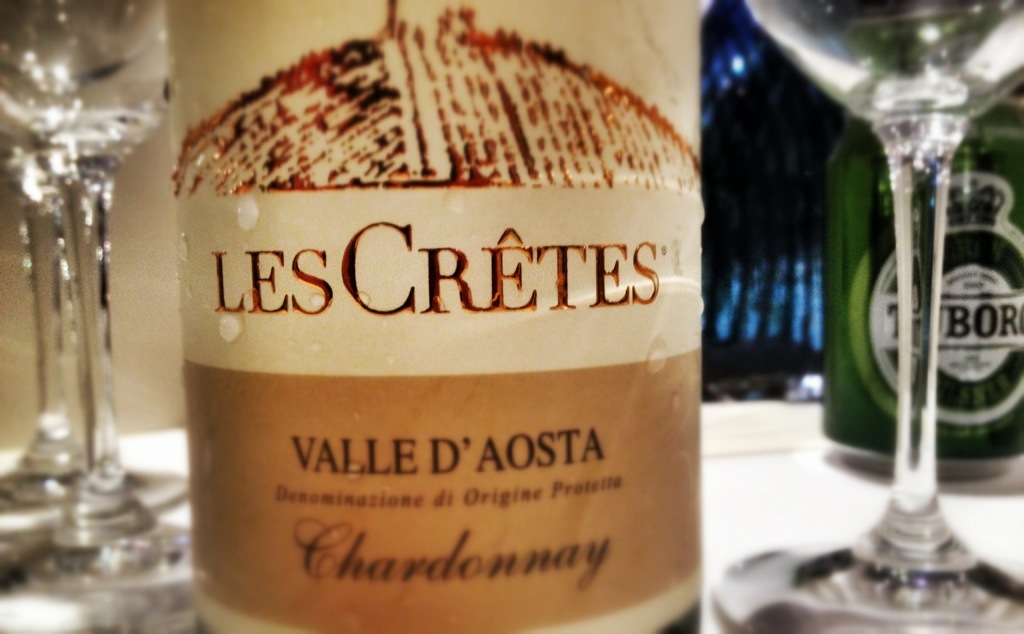
We’ll start with the good, though, and a terrifically successful few hours spent focusing on the produce of the Valle d’Aosta, an obscure corner of Italy which is home to some even more obscure grapes, including Petit Rouge, Vien de Nus, Fumin and Petite Arvine. It’s perhaps a shame, then, that my favourite wine was made from probably the least obscure white grape of them all, but them’s the breaks.

They don’t make a lot of wine in the Valle d’Aosta. It’s a bit hard to find out precisely how much, as the only English-language statistics I can find give the region’s annual production of grapes in quintals, which is a bit like them giving the price of something in florins. But for what it’s worth they produced 24,000 quintals in 2008, making it the smallest wine region in Italy by a very long way (about a fifth of titchy Liguria, and a 20th of poky Molise) and putting its  production at 0.22% of the largest, Veneto, home to all those oceans of Pinot Grigio.

On further investigation it seems that in 2011 the Valle d’Aosta produced 13,000 hectolitres of red wine, enough to fill 1.7 million bottles, and a little over half as much white. That’s not a lot of wine, not really. The entire region produces as much wine as Dom Perignon, or the American zinfandel specialists Ravenswood. My first experience of Aostan wine came when I happened upon a bottle of fabulous Fumin at Les Caves de Pyrene, and I’ve since bought every wine from the region I’ve seen. Both of them. Those selfish Italians drink most of the little wine they make, leaving but a tiny trickle for us over here.

There are excellent reds, and some delicious sweet wines (my favourite, a moscato passito from La Crotta di Vegneron, isn’t available outside Italy) but the whites we tried were all bright, clear, and full of the somewhat hard-to-define quality winefolk call minerality. I particularly loved Les Cretes’ unoaked chardonnay, as bright and joyful an expression of this often overlaboured grape I’ve had in a good while. The best price I can find it for in the UK is £17.08, when bought by the case from Winebear, which is quite a lot for such an unpretentious wine, but it seems to cost around £9 locally, making it as good a reason as any to drive to Italy. If I had a big party to organise this year I’d be hiring a van and booking a ferry right now. The same producer’s Fumin is also excellent, and definitely worth sticking in the boot, given that you’re driving through.

Now, the less good. One of the problems of being constantly and quite successfully in the search of wine bargains is that you can forget, or not even realise in the first place, the value of some of the stuff you own. And so it was that on Monday I poked around the wine fridge for a simple wine to share with Mrs CF over dinner and produced something procured from I don’t know where for I don’t know how much that looked suitable. In a flash the cork was out, glasses produced and … as soon as I poured it I knew something was up. It was so much darker, fuller, deeper than I expected. And then, the smell. And the taste. This boy was smooth, the kind of smooth that requires several more than the traditional two O’s to express. It was smoooooooth. It was a wine to dive into and submerse yourself in. One so alluring, so totally lacking in nasty corners or poky thorns that might put off even the very occasional wine-drinker, that it would be certain to impress a tableful of important guests. And so to wine-searcher, where I found that it costs £39.99. That makes it perhaps the most expensive wine I own, or very close, and totally inappropriate for a Monday evening a deux. It was my only bottle. It’s gone. It was good. I want more. I won’t get it. Bah.

An enormous bargain from The Wine Society

20130207-171220.jpg

January is an expensive time to like wine. The new year brings sales, each more tempting than the last, plus a new vintage of en-primeur Burgundy, if that’s your thing, and the usual steady stream of merchants’ offers.

I have resisted reasonably well, even though there have certainly been some bargains to be had. One, though, caught my attention: The Wine Society’s “chocolate indulgence case”, presumably intended as a Christmas present but reduced in January from £40 to £12.95, and then again to £9.95. There’s only one bottle of wine inside, a sweet red made from the tannat grape which normally costs £12.95 on its own. So what they were essentially offering, by the end, was not just a discount on the wine, but a load of free chocolate and free delivery as a (literal) sweetener for the effort of opening your front door and taking it off their hands.

I bought four. I thought it would be a good thing to take to friends’ houses if they invite us round to dinner, or a birthday present, or a Valentine’s treat for Mrs CF. What I didn’t think, though, was that the box would be so ruddy enormous. It’s only 50cl of wine and a bit of chocolate, after all. So much for keeping them a secret til February 14 – they’re currently taking up most of the living room. It seems that when I decided it looked like an enormous bargain, I still didn’t realise quite how big my bargain would be.

Why Scandinavians love riesling, and what they eat with it

20130206-175724.jpg

Fact: until this week I had been to Scandinavia more often than Wandsworth. And I had been to Scandinavia twice. I’m a north London boy, born and bred. I know east London a bit and west London a bit, but anything further south than the South Bank and I’m lost. I’ve got nothing against it, but this is a big city and one man can’t know all of it.

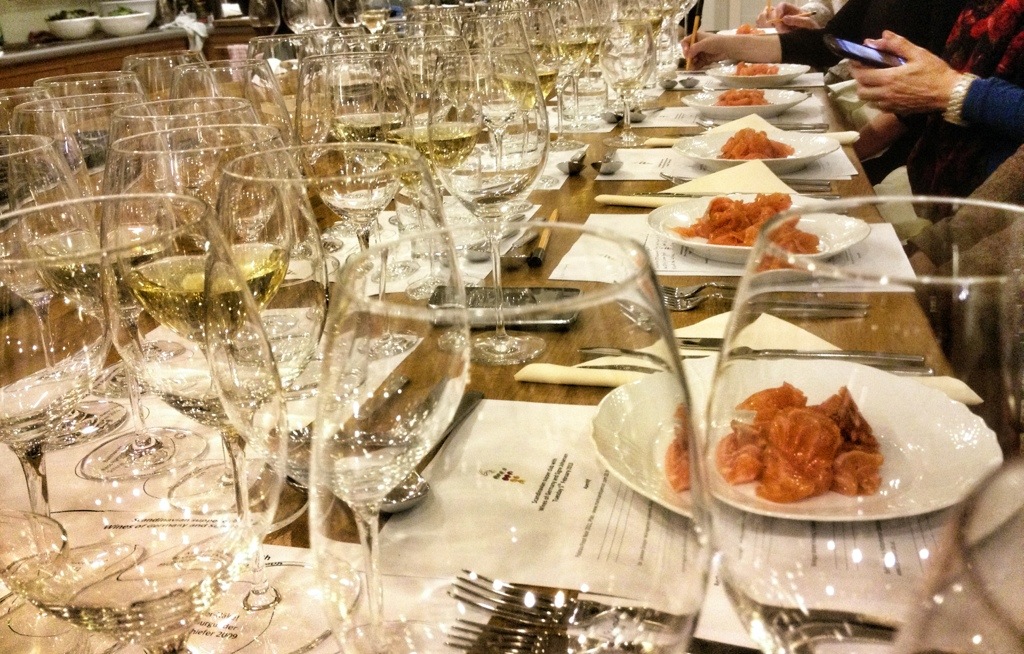
I was tempted into a second trip to Wandsworth (the previous being a visit to the excellent Thameside drinking establishment The Ship, which suggests a certain theme to my capital exploration) by the prospect of German wine and Scandinavian food, the grub prepared by Signe Johansen of Scandilicious fame.

Those Scandinavians, you see, simply love their German wine – it makes up more than a third of all white wine consumed in Norway, making them the world’s fourth-biggest importer of all deutsche wein, behind only the US, the UK and Holland (Sweden is at No7, with Finland at 14 and Denmark at 16). Interesting German wine-sales stat, while we’re here: the average bottle of German wine sold in Norway costs precisely 2.14 times as much as its equivalent here in Blighty, where the inglorious likes of Tesco Liebfraumilch Pfalz or Sainsbury’s House Hock (both £3.99 a bottle) presumably make up a fair old chunk of sales. Other interesting German wine-sales stat: though Germany is still Britain’s eighth most-popular wine producer, we import 52% less of their juice than we did a decade ago; meanwhile the fastest risers in our top 10 include Chile (up 83%), Spain (up 78%) and New Zealand (up a vertiginous 283%).

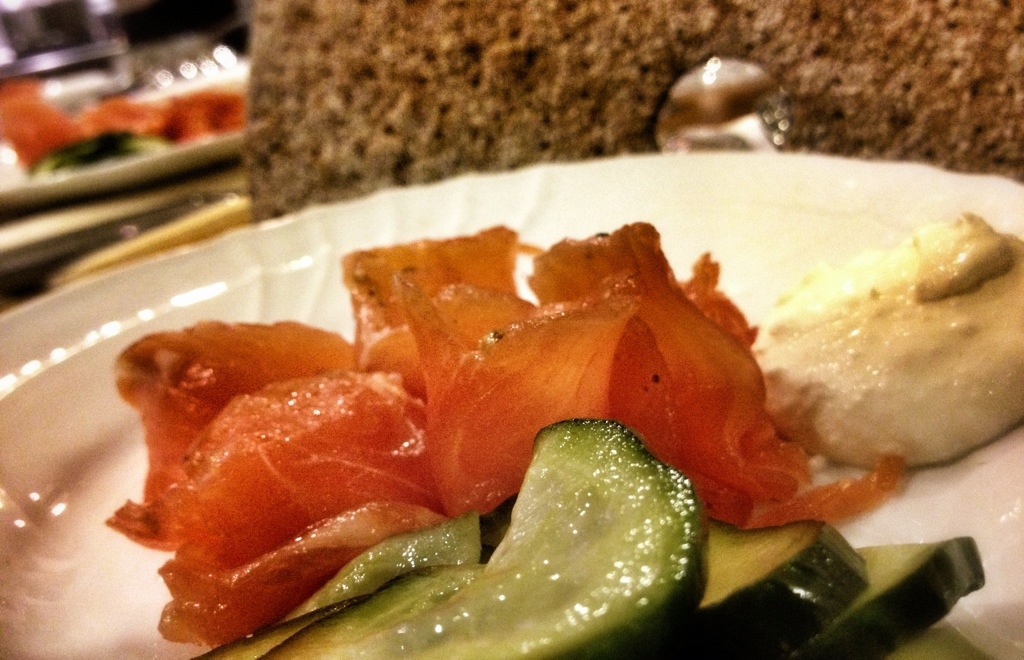
It’s not hard to see why they’re such a bunch of riesling-guzzlers up there. Scandinavian food + German wine = an inevitable combination of riesling, cured salmon, pickled cucumber and crispbread coming up sharpish, and it’s no less delicious for its predictability. The salmon we got, cured with fragrant, subtle and obtainable-by-mail-order-or-by-actually-finding-wild-dill-flowers-and-shaking-them-only wild dill pollen, was so good I’m going to make my own next week (the Financial Times has the recipe), with a riesling labelled trocken but revealing a gentle just-sweetness working very nicely alongside.

20130206-175754.jpg

The main course – a venison stew, served with salt-baked celeriac, buttered sprout-tops and a pearled spelt and mushroom combo – was less successful; the meat hadn’t cooked to melting tenderness, and was too darkly savoury to make best use of the fruity pinot noirs offered alongside (a pre-dinner nibble of nutmeg-laced veal and pork meatballs did a better job of that). Three pinots were poured, most notably the widely-praised Palataia (£8.99, M&S, but showing out of stock online), which seemed to me a little over-alcoholic at 13.5% and is some way from being the best wine you can get for nine quid; and a comparatively subdued – which is not a criticism – Peter & Peter 2011 (£10, Tesco online) which is currently on offer at £7 and is decent value at that price.

Pudding was most excellent, first a heavily almonded rhubarb cake, and then a delicate yet decadent madeleine – more of that nutmeg in use here – both of them subtly rather than aggressively sweet, allowing the lemony liquid lusciousness of the rieslings they came with to do their thing. I’m not one to get hung up on wine-and-food matching, but some things are just right. For me this is where the kabinetts and spätlese of the riesling world are at their very finest, holding hands with just-sweet, starchy food – be it madeleines for pud or butternut squash soup for starter.

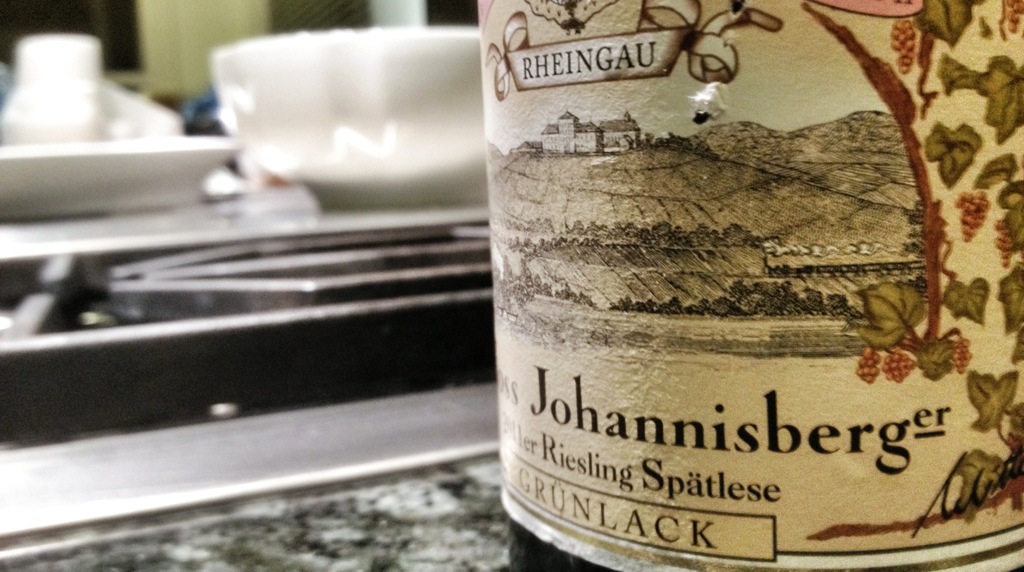
This – a 2011 Schloss Johannisberger spätlese from Grünlack – was the last wine of the night, and also my favourite, bright and fresh and anything but cloying. Inevitably, it was also the most expensive – it generally costs around £40, though the price at Strictly Wine (I’ve never used them and can’t vouch for them) is significantly cheaper, at £28.99. It’s not the biggest bargain in the wine world, but I’d wager that it’s better than seven-and-a-quarter bottles of Sainsbury’s House Hock.

20130206-175801.jpg

Two good wines and one good meal

20130131-115342.jpg

I always feel a little bit guilty when I follow a critic’s recommendation when choosing a wine to buy. Shouldn’t I know enough by now to make an informed decision all of my own? Shouldn’t I experiment, rather than taking the safe option of snaffling a wine I know – or someone I trust knows, or someone lots of people trust but I have no firm opinion of – to be good?

But if buying a wine because a critic likes it is bad, making an independent decision to buy a wine which a critic then declares to be excellent is good. It’s all about the timing. And this satisfaction has never been so rapidly delivered than it was last month, when on the evening of December 6 I placed an order with the Wine Society for a variety of cheapish wines, and on December 7 Jancis Robinson, doyen of British wine writing, chose one of them as her wine of the week.

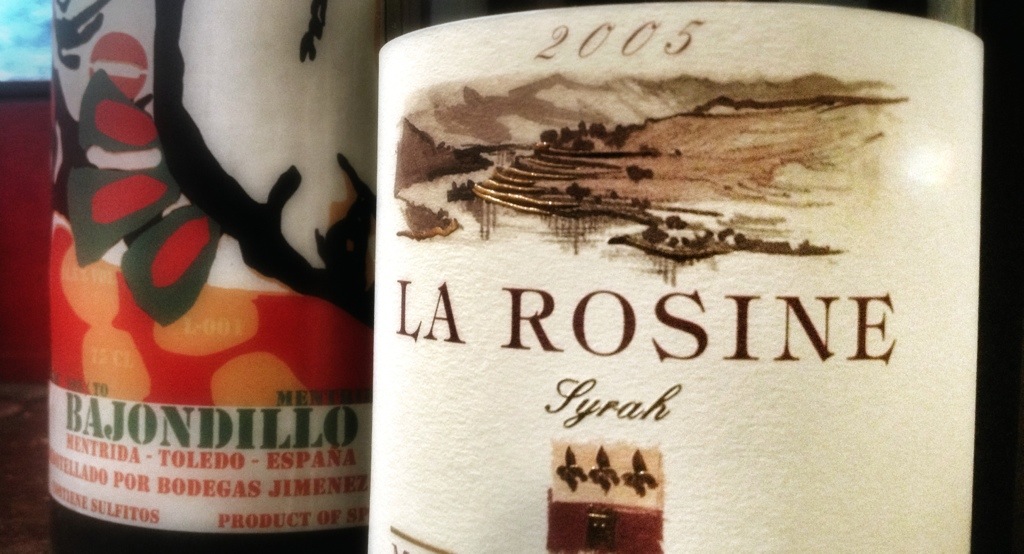
This week I finally got round to opening one, and found it … well … extremely characterless. It was perhaps a little cold, and I certainly didn’t hang around between opening, pouring and drinking, but there was almost nothing there to smell and not much more to taste. But slowly it unfurled: three hours later it was good, the following night it was excellent, full of fruit but not at all overdone. I even – and I know this is no reason for buying a wine, and I should slap myself on the wrist just for thinking it – like the label. Presumably Jancis tried it at a press tasting, from a bottle that would have been opened some time earlier, but like her I think this is an extremely good buy at £7.50.

More than twice the price but still worth recommending is Ogier’s La Rosine, a relatively cheap vin de pays from people better known for their Cote-Rotie. I’ve tried the 2005, the 2009 and the 2010 and they’re all great, particularly the latter. This is the 2005 and is close to being my perfect weekday wine, with that savoury, bloody, iodine* character that the northern Rhone does so well, but at an affordablish price (Berry Bros have the 2008 for £17.40, though I’m told it’s regularly available at their Basingstoke bargain retail outlet for around a tenner). In Hugh Johnson’s Pocket Wine Book (reviewed here) Ogier is allocated just a single word – oak – which I fear does them a disservice, though clearly they do keep the coopers busy. They’re good. Buy with confidence.

* Who knows what iodine really tastes like? I’ve never slurped the stuff, but it’s one of those words used in wine reviews that refers to a particular flavour in wine that no other word refers to. I find these words amusing. Robert Parker does too, and I can tell because his reviews are totally stuffed with them. In a random selection of five Bordeaux reviews you are extremely likely to see more uses of the word “camphor” than non-Parker-readers happen upon in a lifetime. I reckon he chuckles every time he uses it.

The Quality Chop House: not a house, no chops, but definitely quality

While I’m here, another tip, in the form of a restaurant that despite having relative novelty on its side, and getting some favourable reviews, was inexplicably empty. Sure, there’s mitigation – it was cold out, and it’s January, and it was a Monday – but that’s not a good sign. What was a good sign, though, was the quality of good food they proceeded to give me, and the manner in which they did it, and the wines I could choose to go with it. The menu in the evening offers no choice: you get four courses, it costs £35, and you’ll ruddy well like it. And you will ruddy well like it, stuffed as the little menu is with quality British ingredients, mostly prepared with skill and without fuss. The food wasn’t perfect – a fish soup was too peppery; there was a Jerusalem artichoke fritter that I wasn’t convinced by – but firstly the hits more than make up for the misses – perfectly cooked monkfish, amazing slow-cooked venison bites for starters, and as good a lamb rump as I’ve ever encountered – and secondly it is served with a spirit of generosity which is rarely encountered away from home, and which I find overwhelmingly pleasing. Things come on platters or in dishes or even tureens (full of custard, the best kind of tureen in my experience) for sharing among your party, bottles of still and sparkling water are handed over without prompt or charge, and they even offered us seconds (and not just of water). The wine list was interesting and the mark-ups not insane. Sure, it’s £35, which with service and half a bottle of wine means you’re unlikely to spend less than £50 on your dinner, but for what you get and the way that you get it I think it’s fabulous value and I’ll certainly be back (I just hope that they can fill enough uncomfortable pews to still be there when I do).

Wines of the weep: the taste of tears

Image

As I’ve said before, I think Victoria Moore is basically excellent, and writes very good weekly wine articles for the Telegraph. On Saturday she wrote about the latest Burgundy vintage to hit the market, the 2011s, which have been shown off at a series of tastings in London this month. Her article began thus:

“Burgundy is the only wine I know that makes grown men cry. When I say cry, I really mean weep, overcome, as opera buffs might towards the end of Verdi’s La Traviata. I sometimes see it in tasting rooms. The Domaine des Lambrays table is one to keep an eye on for spotting otherwise undemonstrative men discreetly tipping their heads back to keep the tears in, and I recently had an email from a seasoned trade suit confessing that on tasting DRC’s La Tache, he’d had to stride off in a manly fashion for a private sniffle in a corner.”

I’ve been to lots of tastings, and though none of them have involved DRC’s La Tache, I’ve tried some pretty good wines. For that matter, I’ve eaten some great food at wonderful restaurants, seen great art in world-famous galleries, and gazed at wonderful views from the tops of awesomely picturesque mountains. I’ve never seen anyone weeping at any of them. Watching your team lose, or indeed win, an important football match; reading One Day; watching ET. These things make people cry. Sipping some tasty Chablis, not so much.

There are plenty of women involved in wine, but I’d say that most people at tastings in the UK are men. British men, taught not to weep in public under any circumstances, not if people call them a very nasty name, or they get stung by a wasp, or they witness their grandmother getting run over by a herd of cattle. I just can’t see a slurp of wine overcoming a lifetime of culturally enforced emotional suppression, however good it is.

If I did see a man weep after being stung by a wasp, I would understand. Wasp stings hurt. If I saw a man weep after trying a sip of wine, I would strongly suspect that they were seriously troubled. At the very least, I would think they need to reassess their priorities. I would certainly make sure that I spent the rest of the tasting on the other side of the room. Frankly, the only drink that I could imagine moving me to tears is bleach.

Am I wrong? Has my cold, uncaring heart turned totally to stone? Have you ever seen someone blub over wine? Or could it be that the people Victoria Moore writes about had not, in fact, just been given some wine, but had been shown a price list?

PS The picture is Old Man in Sorrow (On the Threshold of Eternity) by Vincent Van Gogh, or some of it at least.

Wines of the year

20130107-214539.jpg

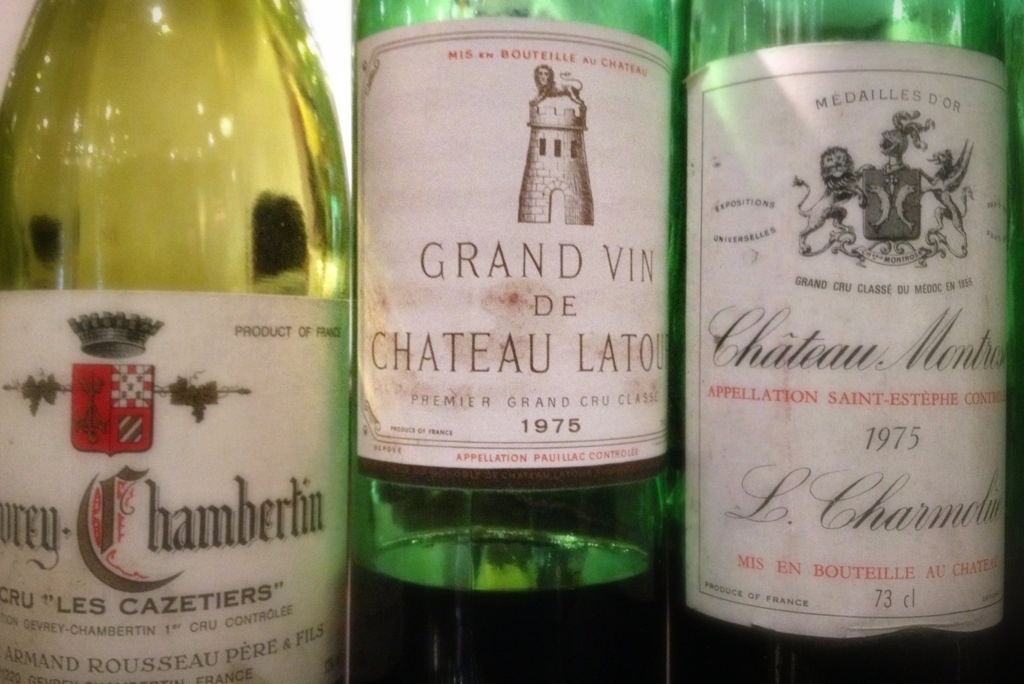
It’s been a big year for me, wine-wise. A year of firsts. My first Yquem (amazing), my first first growth (Latour 1975 – excellent), and many hundreds of significantly cheaper others have been thrown into my mouth and then thrown back out again, one way or the other. But I’m a man of simple tastes, so simple that my favourite white wine can be found for a graze under £9, which are both too expensive for me ever to buy for myself. So, here are a handful that stand out:

Red wine of the year: Vincent Paris St Joseph 2009. Drunk at home Paris is a fairly young producer in the northern Rhone who has built up an excellent reputation, and as I’ve spent the last couple of years exploring the more affordable outposts of that area he’s appeared on my radar several times. Cornas is his thing, but the St Joseph is his cheaper side-project and when I bought a mixed case of his 2009s this was the first to get opened. I was expecting it to be decent, but I wasn’t expecting quite so much character. Quite light-bodied, quite savoury, most excellent. It’s not enormously easy to find – I see the Cornas much more often – and normally between £15 and £18 when you do (though I was so excited by this that I bought an entire case of the 2010 from WineBear, where it works out at £13.70 a bottle, which I think is phenomenal value).

White wine of the year: Vasse Felix semillon/sauvignon 2010. Drunk at home. Repeatedly This costs £11.99 at Waitrose, but can often enough be found at £8.99 on a 20% off promotion. It’s lovely, sprightly, zippy, and perfect for summer or any occasion when you particularly want to make yourself or other people smile. If you’re starting to tire of sauvignon blanc, I would heartily recommend finding someone who’ll put some semillon in it for you – it sorts it out proper good, as any Bordelais will tell you. It was my very great pleasure to meet Vasse Felix’s lovely winemaker, Virginia Willcock, at a dinner in London a couple of months back, where she was making a brief appearance as she toured the world picking up awards for her brilliant 2010 Heytesbury chardonnay (the cheapest I can find that one for is £26.30 a bottle, which is a bit rich for me, though not bad value for what you’re getting). It’s worth keeping an eye out for the Vasse Felix label – she seems to make very good wine.

Sweet wine of the year: Chateau Coutet 1971. Drunk at The Square, December I’m not one for getting overbothered about wine and food matching, but sometimes you’re presented with – or might even fashion for yourself – something so perfectly perfect that it’s genuinely revelatory and transformational. This was one such moment, as an incredibly fine mature sauternes met a desert of simple elegance from Phil Howard (creme caramel with fat, juicy, boozy golden raisins and sauternes jelly), and the two got on absolutely famously. This is an incredibly good sweet alcoholic beverage, and it can still be purchased for £90 a bottle, which is a) a ludicrous amount to spend on 75 humble centilitres of sweet alcoholic beverage; and b) worth every penny. I don’t often see the point of spending more than about £25 on a bottle of wine, but this is something special to make special occasions specialer, and is thus deserving of a special exemption. I had it at a rather high-falutin’ bring-your-own lunch, which also brought my first Rousseau, that 1975 Latour, and also my …

Disappointment of the year: 1986 Penfold’s Grange. Drunk at The Square, December This was my first taste of Australia’s most famous wine, from an exceptional vintage. It was only ruddy corked. Runner-up: The Chocolate Block. A “cult” wine from South Africa that seems to be incredibly popular. I just don’t get it.

Unmissably good value wine of the year: Bricco Rosso Suagna Langhe Rosso 2007, The Wine Society The last bottle of this that I bought – from the 2008 vintage, which I won’t endorse as I haven’t tried it yet but is almost certainly ace – cost £6.25, which makes the price of nearly every other wine in the entire world look a bit silly. Clearly I’m not the only one who thinks this a bargain, as it has sold out, but given that the Wine Society also sold me the 2006, which was also excellent, I’m cautiously optimistic that a 2009 will turn up sometime soon, at which point I suggest you slam dunk a couple of bottles into your next order sharpish.

And that, my friends, is your lot. Here’s to another year of vinous exploration.

Piggy Bank wines – charity begins (while boozing) at home

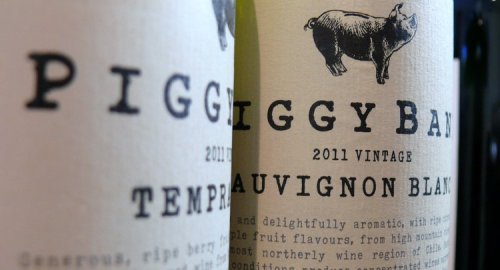
Piggy Bank tempranillo and sauvignon blanc

A giant claxon went off in my head. Imaginary sirens wailed, notional red lights flashed. Somewhere, from a non-existent tannoy, a disembodied voice intoned: “Wine-selling gimmick detected. Please leave the building. Drop this bottle in the recycling on your way out.”

Of course, there are gimmicks and there are gimmicks. I once bought – bought, via the transfer of my money to a retailer – a bottle of white wine that featured a coral reef scene and a lenticular shark, which would appear to swim as you poured the wine. Of course the best place to pour that particular wine was into the sink, so grizzly were the contents.

The Piggy Bank people haven’t spent money on gimmicky labels, but for each bottle sold they are promising to give 50p to charity. That’s admirable, but it doesn’t give me much faith in the contents of the bottle. The wines have an RRP of £7.99, but when Tesco had their recent 25% off deal the Tempranillo was being sold off at £4.87. Take off the 50p and there’s £4.37 left for the bottle, the label, the screwcap, the transport, the retailer, their premises, their staff, the grapes, the vineyard, the fertilizers, the pesticides, the tractors, the website and the profit. This is not enough. I do not feel comfortable around £4 bottles of wine.

But I was pleasantly surprised when I opened the bottle. The tannins were a bit grainy, but there was enough in this brambly, dense, dark and very enjoyable wine to make up for that. I thought their sauvignon blanc was even better, delivering everything you want from that kind of wine (refreshment, a bit of zing, bonus charitable donations) and nothing you don’t want (the main problem with commercial sauvignon blanc is a tendency to what I could term aggressive overzing). Thumbs, then, very much up.

But a funny thing happened to the tempranillo overnight. At the end of the evening I popped the screwtop back on and slid the bottle into the fridge. I do this a lot. My experience is that very little damage is done to wine if left overnight – and often for a few days longer – capped or corked and refridgerated. Not this one, though. The following night there was no fruit left, nothing to smell or taste. It was a dead liquid, a grim, loveless leaf soup. I had to pour it down the sink sharpish, and wash my mouth out repeatedly with a lovely and pricey Chianti Classico. There must be a chemical explanation for this, but I’m not a chemist, I’m just a wine drinker. Should I praise this wine because of the positive impression of night one, or damn it because of the disaster on night two? Does its overnight collapse make it a lesser wine – is it a sign, perhaps, of a particular winemaking fault? – or is the blame mine for not slurping my way through the bottle quickly enough?

Thumbs, then, very much still mainly up but with a little bit of tentative sideways action on the Tempranillo front, which handily allows me to continue with my instinctive distrust of £4ish wine. The destination of the charitable donations is, by the way, decided (from a shortlist) by the wine’s drinkers, or at least those who zap the QR code on the label and are taken to the voting page. Which makes this, of all the wines I’ve seen with QR codes on the labels (a lot), the most usefully QR-coded wine of all. Some thought has gone into this stuff, basically, and some charity comes out of it. This has got to be a good thing.

CF’s Christmas wine-related book reviews!

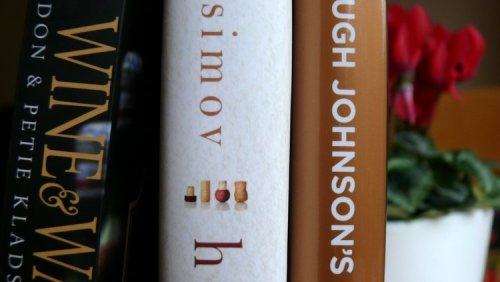
Eric Asimov's How to Love Wine, Hugh Johnson's Pocket Wine Guide, Wine & War

So, this is Christmas. Well, nearly. So you may well be thinking about presents for the wine-lover in your life, which is probably yourself. Of course the best gift for a wine-lover is wine, or failing that money so that they can buy themselves wine, but books about wine are another good idea. They may be less intoxicating than actual wine, but on the plus side it is more socially acceptable to consume them on a bus.

Of the enormous quantity of books published about wine, I offer my opinions on three. Sorry, it’s the best I can do.

So let’s start with a new one, or rather a new version of an old one. It’s Hugh Johnson’s Pocket Wine Book 2013! This is the 36th edition of this hoary classic, packed full of information in very small font. This is a book made for people with deep pockets, in the most literal sense. The RRP is £11.99, but it only costs £6.50 from your local tax-dodging internet book retailer, so it’s not exactly expensive, but I’ve checked all my belongings and there are only two items of clothing with pockets deep enough to fit this pocket book, and one of those is an old duffel coat from which two of the three toggles has fallen off.

There’s a nice, opinionated introduction and a bit at the back about champagne, and in between there’s a lot of very dense information about wine-growing areas and producers. My only quibble here is that some traditional wine-growing areas don’t seem to get the coverage their profile deserves, while most notable new world producers have their own entry. So to take Cote-Rotie as an example, there’s no independent entry for Jamet, or Ogier, or Clusel-Roch though each are mentioned in the main entry for Cote-Rote, followed by a one-word description of their wines in brackets, so it’s “Clusel-Roch (organic)”, “Ogier (oak)” and “Jamet (wonderful)”. This seems unfairly brief, when for example Jidvei in Romania, or Dvery-Pax in Slovenia, or a million other comparatively massively obscure wineries in the world over, get entries of their own. This quibble aside I like it, though my opinion may have been shaded by my admiration for the immense amount of effort that must go into its preparation.

The two other books are very different, having been written for reading, rather than for reference. First is Eric Asimov’s How to Love Wine, the new memoir-cum-extremely-lengthy-rant from the wine critic of the New York Times. The problem is that I’m not sure if my busy life has room in it for the memoirs of  unexceptional people, even if their jobs are quite interesting. Not, at least, unless they write like an angel. Asimov writes acceptably well, but not well enough for me to relish his recollections.

Unlikely every other autobiography I’ve previously read, presumably because Asimov ended up with a job that involves putting stuff in his mouth and evaluating it, he writes at length about what he has enjoyed putting in his mouth in various parts of his life. So for example, a lengthy discourse on his childhood dislike of eggs ends thus: “Today I love eggs, though I almost never drink milk or soda. But back then, I drank Coke and Dr Pepper, 7Up and Hoffman’s Black Raspberry. I loved root beer, but above all I was a fan of Mountain Dew. This was just a simple lemon-lime soda, not the amped-up, hypercaffeinated beverage of today. But when I came in from a day of baseball, street hockey, or basketball, sweaty and parched, nothing was better than a cold Mountain Dew.”

Not only do I not find a list of the brands of soda that Asimov enjoyed drinking in his youth particularly thrilling, there is literally not one person on the entire planet alive or dead whose childhood soda-drinking habits would be interesting to me. It’s not that I’m not interested in other people’s lives, particularly if they (the lives, or the people, and ideally both) are remarkably exciting, but there is a basic point beyond which anyone’s story crashes into bizarre mundanity, and Asimov does not always tread the right side of it. It’s a shame, because some of his opinions about wine are very interesting, well-presented and hard to disagree with. Fundamentally, I think he could have written an excellent lengthy think-piece-come-feature, but boosting it into a book has involved the inclusion of too much stuff I don’t care about.

Lastly, and considerably less topically, a book called Wine and War, by Donald & Petie Kladstrup. This is a nicely-told yarn telling the stories of several key French winemakers during Nazi occupation, and the measures they took to keep Nazi mitts off their good stuff. Concentrating on Huet in the Loire, Hugel in Alsace, and the areas of Burgundy, Bordeaux and Champagne, it’s well researched and extremely readable. Inevitably I do have a quibble, and here it’s that it tells us almost uniquely about winemakers who sided with the resistance. I’m sure that former collaborators and their families must be considerably less likely to want to tell their tale, but I’m also sure that collaborators must have existed, and I’d have liked to know more about them, and what became of them post-war. This is probably, though, the most readable wine-related book I’ve ever read. If you know of possible rivals, I want to know about them. Thanks.

Beach boys

20121117-205121.jpg

The Beach Boys: still widely celebrated but known for the big hits they enjoyed just after they started, and probably also for coming from a picturesque coastal area, but widely seen as being past their best and now mainly enjoyed by those old enough to remember them in their prime.

Cloudy Bay: still widely celebrated but known for the big hits they enjoyed just after they started, and prob … well, you get the idea.

A few weeks ago the kind folk from Cloudy Bay invited me to watch the Beach Boys in concert at the Royal Albert Hall. There was a time when CB were seen as funky young upstarts, leaders of the first great wave of New Zealand wine and pioneers of a new style of sauvignon blanc, but here they were embracing the ultimate in dad-rock, a bunch of septuagenarians whose shirts are considerably louder than most of their music, in London’s least cutting-edge venue. But then it says a lot about CB’s altered image that they now sponsor a bar in the Royal Albert Hall, whose other wine-related partners are Moet & Chandon, Queen Victoria’s favourite fizz, and Berry Bros & Rudd, founded 1698. This place is not so much hip as hip replacement.

Cloudy Bay are now unashamedly part of the wine establishment, but now that you can get a half-decent Kiwis savvy from any wine shop in the land and get change out of a tenner – half that, if you’re lucky – they need that image of exclusivity and class, of being the first and best, to encourage people to spend the £20 they want for it.

I tried the 2011 sauvignon blanc, which I liked quite a lot and was certainly classier than the average NZ sauvignon, though for me it’s not a style of wine I’d want to spend £20 on. Since then I’ve also tried the 2012, which I found a little less appealing – though its slightly jarring exuberance could well have been down to its youth. The good thing is that the days when Cloudy Bay’s sauvignon was so scarce that shops wouldn’t let you buy more than two are in the distant past. These days it’s available in Sainsbury’s and Tesco, where they don’t even classify it as a fine wine (which means it’s included in their 25% off offers, bringing the price down to something in the neighbourhood of £13.50, at which point it approaches good value). And their label remains one of the prettiest you’re likely to see. My overall verdict on the Bay’s famous savvy: good vibrations!

I also tried their 2010 pinot noir, which was rich, full of dark cherry fruit and really quite appealing (Verdict: do it again) and their 2008 chardonnay, which tasted largely of oak and cheese and was considerably less to my taste (Verdict: god only knows). And I have in my fridge a bottle of riesling, which I’ll open tomorrow, so prepare for an update.

K5 Arginano – I want your X

I went to the Basque Country a few years ago, and a very fine time I had too. It was a land rich in hospitality and fine, cheap food, overflowing with spare X’s and Z’s, blessed with excellent beaches and surfing and scenery and fiercely proud of their local alcoholic beverage. And that beverage, with absolutely no doubt, was cider. Very fine, dry cider. Cider that barmen would insist on pouring into and around your glass from a comical height in a primitive form of amateur carbonation.

Turns out they make wine, very good wine. Obviously, Basques being Basques, they have to decorate the label with unusual consonants. For a start, they named their winegrowing area Getariako Txakolina – it sits in the foothills of a mountain called Eztenagako Txorrua. The vast majority of its output, including this bottle, is white wine made from the Hondarribi zuri grape.  Nothing on this wine’s label is familiar to me.

But I’d be very happy for what’s inside it to become more familiar. This is decent stuff, and it’ll get better. It’s very taut at present, all acid and apple and elder. The label – the bit on the back that’s in English – suggests that “due to our careful winemaking methods and extended lees ageing, our wine will gain much complexity with time in bottle”, and I’m very tempted to believe them. It’s similar, in character if not taste, to a very young Clare Valley riesling, a wine very acidic in its youth that at its best develops great complexity with several years spent laying about in a bottle. For now it’s impressive but immature, good with the right kind of food but not something to relax with on the sofa. Give it five years, though, and it should be significantly more cuddlesome. It cost me £15.50 from one of my two local purveyors of excellent vinous obscurity, Theatre of Wine, but would have cost me £18 at the other, Bottle Apostle. You may well point out that that without even looking for a bargain kind I could get one of those very good Clare Valley rieslings instead for that kind of price. Perhaps it could be a little cheaper, then, but forgivably so – someone’s got to pay for all those X’s and Z’s, after all, and they don’t print themselves.

Incidentally, it’s worth popping over to the producer’s website, just to check out the view those vines enjoy. Not. Ruddy. Bad.

Other interesting wine of the week

Also this week I pottered over to the Greenhouse in London’s Mayfair for lunch with Madame Duval-Leroy of Champagne Duval-Leroy fame, her winemaker, one of her sons and a couple of other Duval-Leroy people. Though they produce between four and five million bottles a year, it’s not an enormously well-known Champagne house, but I was impressed with the handful of wines I tried, all of them made in a fresh style but without any aggression. Worth immediate recommendation is the Fleur de Champagne Premier Cru, which is available at Waitrose until 6 November for £19.99, a £10 saving. With Christmas on its way there’s going to be no shortage of cut-price fizz, but I think £20 is very good value for an excellent aperitif Champagne, and it’s certain to improve further if you can hide it somewhere for a year or two. There’ll be a lot of sub-£20 champers flooding the supermarkets in the next couple of months, but I doubt that much of it will beat this on quality.